
هەواڵ
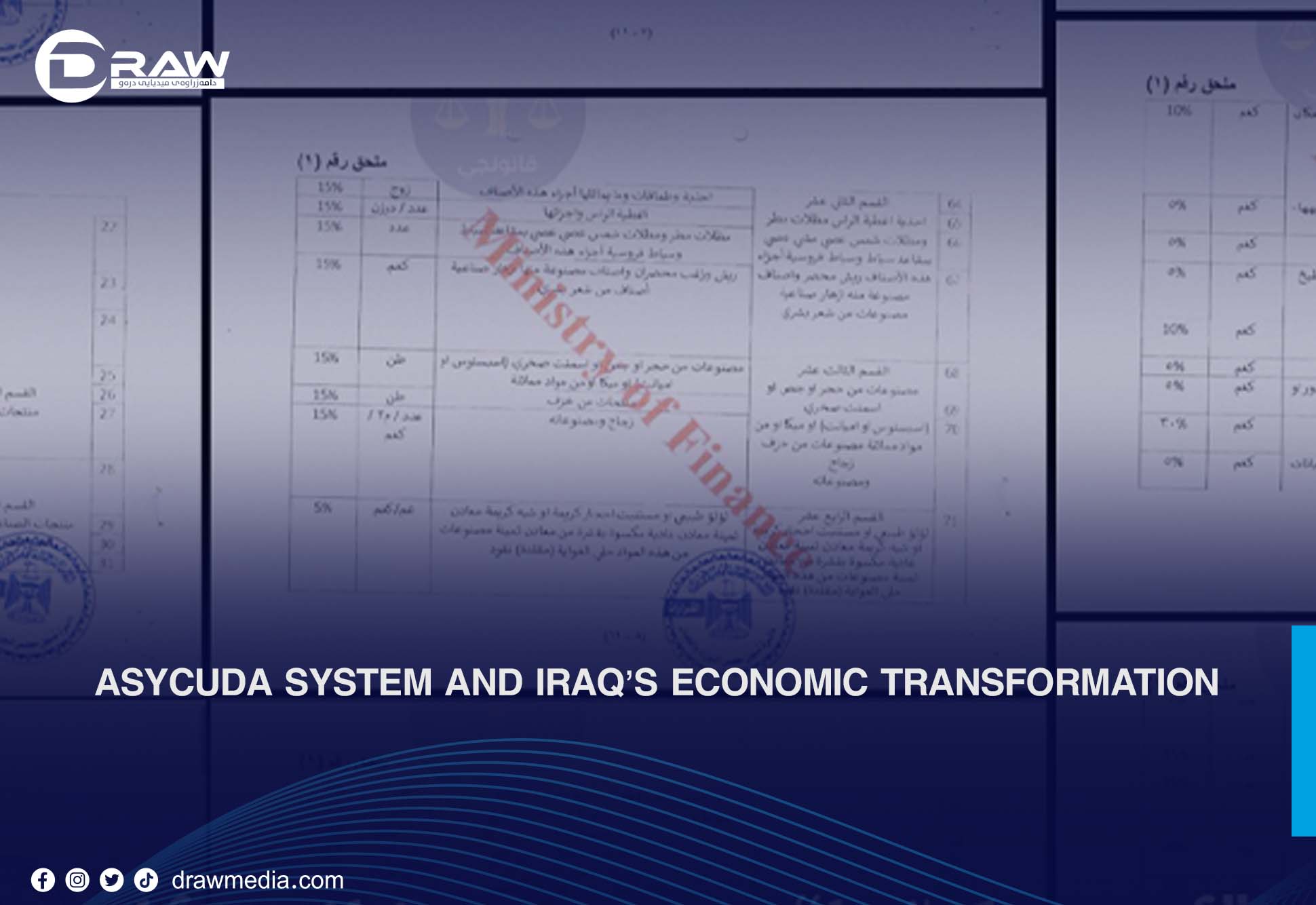
ASYCUDA System and Iraq’s Economic Transformation
بڵاوکراوەتەوە لە : 17 شوبات 2026
قەبارەی دەقەکان
قەبارەی دەقەکان
هەواڵ
بڵاوکراوەتەوە لە : 17 شوبات 2026
قەبارەی دەقەکان
قەبارەی دەقەکان
Here is what should be known about the ASYCUDA system, which has recently become a subject of controversy in Iraq:
The main function of this system is to eliminate paper-based and manual procedures at customs and convert everything into electronic processing—from collecting customs duties, inspecting shipments, to monitoring revenues.
The system is highly precise and does not allow any money to “pass through” unofficially. This has made traders feel the impact of higher costs that they previously avoided, either illegally or through under-declaration.
Baghdad intends to implement the same ASYCUDA system at all border crossings, including Ibrahim Khalil, Bashmakh, and Parwezkhan.
Implementing the system means Baghdad can monitor, through central servers, every shipment and every dinar of revenue collected. This puts pressure on the Kurdistan Region to transparently hand over revenues or account for them within the federal budget.
If the Kurdistan Region does not implement the system, Baghdad may impose customs checkpoints at internal crossings (such as between Kirkuk and Erbil), which could disrupt trade and increase prices within the Kurdistan Region.
If Baghdad does not recognize the Kurdistan Region’s customs and does not unify the system, traders could be forced to pay customs twice—once at Ibrahim Khalil and again upon reaching Kirkuk or Mosul. This “double taxation” encourages smuggling.
Iraq is currently facing a major economic turning point. The implementation of the ASYCUDA system is not merely a shift from paper to digital customs procedures, but a declared effort by the state to enforce the rule of law and transparency in one of its most corruption-prone sectors.
If implemented properly, ASYCUDA acts like a “painful surgery” for Iraq’s economy:
On the one hand, it reduces corruption and increases state revenues.
On the other hand, if poorly implemented, it may increase living costs and cause dissatisfaction among traders.
Iraq’s problem is not a lack of technology, but excessive political interference. ASYCUDA is like a mirror—it reveals the system’s flaws but cannot fix them on its own.
ASYCUDA stands for Automated System for Customs Data. It is a modern computerized customs management system developed by the United Nations Conference on Trade and Development (UNCTAD).
Its core functions include:
Eliminating paper-based customs procedures
Electronic customs declarations
Automated tariff calculation
Shipment inspection and tracking
Revenue monitoring
The Iraqi government aims to use the system to prevent corruption, fraud, and tax evasion, as the system automatically calculates standardized global tariffs.
However, traders complain that the system is strict and applies high tariff rates, increasing import costs and consumer prices.
The system includes several digital components:
1. Electronic Manifest (e-Manifest):
Shipment information is submitted before arriving at the border.
2. Risk Management System:
Shipments are categorized into three risk levels:
Green: No inspection required
Yellow: Document inspection only
Red: Full physical inspection
3. Banking Integration:
Payments must be made electronically through banks, preventing cash corruption.
The system is used in more than 100 countries, including Jordan, Lebanon, and Egypt. Its benefits include:
Faster processing (from 2 weeks to 2 days)
Increased government revenues by 20% to 30%
Accurate trade and economic data for planning
The controversy lies not in the system itself but in how it is implemented:
1. New tariff policies:
The system strictly enforces tariff rates, preventing manipulation.
2. Weak digital infrastructure:
Many customs employees and traders lack digital training.
3. Standardized tariffs:
Regional variations in customs rates are eliminated, affecting local markets.
Key issues include:
1. Unified border control:
Baghdad wants the same system applied across all borders, including Kurdistan Region crossings.
2. Revenue transparency:
Baghdad will monitor regional customs revenues electronically.
3. Trade disruption risks:
Failure to implement the system may result in internal customs barriers.
If smuggling routes remain open:
Legal traders will face unfair competition
Government revenues may decrease
Smuggling networks will benefit financially
Solutions include:
Joint federal-regional customs enforcement
Electronic verification systems at checkpoints
Lower tariffs to discourage smuggling
Food sector:
Basic goods have low tariffs, but the costs of packaged food have increased.
Construction sector:
Higher tariffs on imported construction materials increase building costs.
Vehicles and electronics:
More accurate classification increases taxes on cars and devices.
Luxury goods:
Tariffs increased significantly, up to 30–50%.
ASYCUDA highlights deeper structural issues:
Technology alone cannot solve corruption without political reform
Political influence still allows some traders to bypass regulations
Smaller traders face more pressure than politically connected ones
ASYCUDA represents a major transformation in Iraq’s customs system.
It can:
Reduce corruption
Increase government revenue
Improve transparency
But without political cooperation, proper implementation, and enforcement against smuggling, its economic benefits may be limited and could increase costs for citizens and businesses.