
هەواڵ
How Was the Session to Elect the President Postponed?
بڵاوکراوەتەوە لە : 29 کانوونی دووەم 2026
قەبارەی دەقەکان
قەبارەی دەقەکان
هەواڵ
بڵاوکراوەتەوە لە : 29 کانوونی دووەم 2026
قەبارەی دەقەکان
قەبارەی دەقەکان
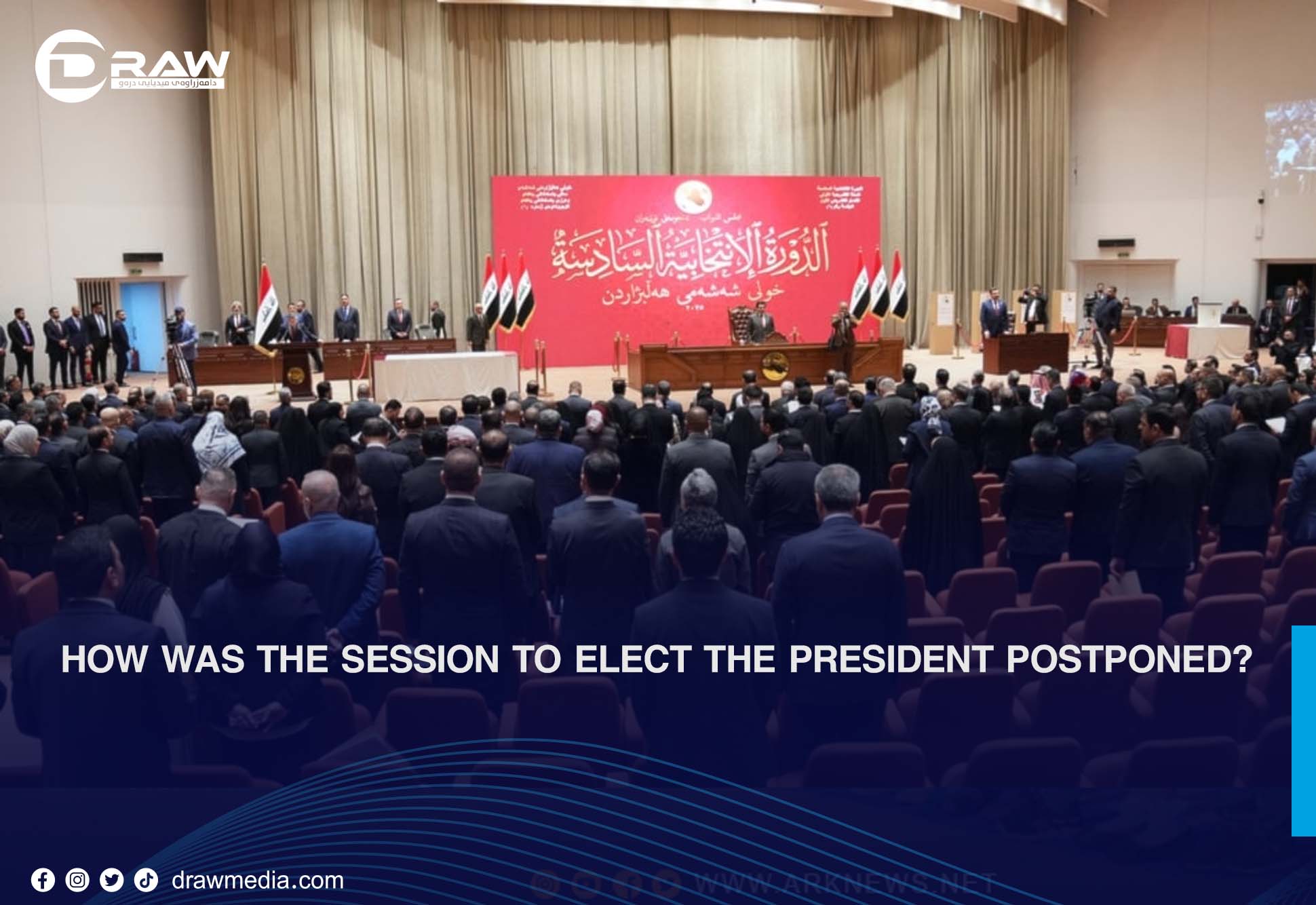
The special parliamentary session to elect Iraq’s new president has been postponed to a date yet to be officially set. Due to disagreements between the Kurdistan Democratic Party (KDP) and the Patriotic Union of Kurdistan (PUK), concerns have emerged about the risk of breaching Iraq’s constitutional deadlines. To address this, reliance has been placed on official holidays.
According to the constitution, for the session to convene, at least 220 MPs must be present out of 329, and the president is elected in the first round by the same number of votes. Otherwise, the process moves to a second round. With continued KDP–PUK disagreements, there is a possibility of forming a “blocking third.”
Why the Session Was Postponed
The Iraqi Council of Representatives was scheduled to elect a new president on Tuesday, January 27, but at the request of the KDP and PUK, the session was postponed. Although Parliament has not formally announced a new date, a request submitted by Shakhawan Abdullah, head of the KDP parliamentary bloc, proposed postponing the session to Sunday, February 1, 2026, to allow Kurdish parties to reach an agreement on a candidate.
Constitutional Deadline Debate
Article 72 of the Iraqi Constitution states that after the first session and election of the parliamentary presidency, Parliament must elect a new president within 30 days.
Parliament elected its presidency on December 29, 2025, and opened presidential nominations on December 31, 2025, making January 28, 2026, the constitutional deadline.
Based on this, some political actors consider postponing the session to February 1 a violation of constitutional timelines. However, Sraw Abdulwahid, head of the New Generation Movement bloc, argues that official holidays are not counted within the constitutional time frame, allowing for an extension.
How Is the President Elected?
According to Federal Supreme Court Decision No. 16 (February 3, 2022), interpreting Article 70 of the Constitution, the quorum for a presidential election session is two-thirds of Parliament—220 MPs.
If no candidate secures two-thirds of the votes in the first round, a second round is held, where the candidate with the highest number of votes wins. The quorum remains the same even in the second round, and the process continues even if some MPs leave the session.
The “Blocking Third”
In 2022, during the fifth parliamentary term, Shiite forces split into two camps, leading the Federal Supreme Court to set the quorum at two-thirds. This enabled pro-Iran Shiite factions to form a “blocking third” (110 MPs) to prevent quorum completion, ultimately collapsing the Sadr–Barzani–Halbousi alliance.
In the current term, a similar scenario could arise if the KDP and PUK fail to agree on a single candidate and if Shiite and Sunni blocs exploit Kurdish divisions.
Presidency vs. Interior Ministry
By political convention since 2003, the presidency is allocated to the Kurds and has historically gone to the PUK. As in previous terms, the KDP has again nominated its own candidate.
PUK candidate: Nazar Amidi
KDP candidate: Fouad Hussein
No agreement has yet been reached on a unified Kurdish candidate. The KDP insists that whoever wins the presidency must relinquish four Kurdish ministerial posts in Baghdad. The PUK, meanwhile, wants to maintain its current gains and demands two ministerial posts, in addition to supporting a KDP candidate for second deputy speaker of Parliament.
These disputes are intertwined with disagreements over the formation of the 10th Kurdistan Regional Government cabinet, particularly over the Interior Ministry, which the PUK claims. The KDP is seen as pressuring the PUK in Baghdad via the presidency, while the PUK pressures the KDP in Erbil via the Interior Ministry. Resolving one could unlock the other.
Final List of Presidential Candidates
Parliament announced a final list of 19 candidates for the presidency:
Shwan Hwaiz Fariq Namq
Ahmed Abdullah Tawfiq Ahmed
Hussein Gah Hassan Mohammed Sinjari
Najmuddin Abdul Karim Hama Karim Nasrallah
Asu Faridun Ali
Saman Ali Ismail Shali
Sabah Saleh Saeed
Abdullah Mohammed Ali Vaher Al-Aliawi
Abdul Latif Mohammed Jamal Rashid Sheikh Mohammed
Iqbal Abdullah Amin Halawi
Nazar Mohammed Saeed Mohammed Kanji
Sardar Abdullah Mahmoud Taymez
Fouad Mohammed Hussein Beki
Manni Amin Nader
Nozad Hadi Mouloud
Khalid Siddiq Aziz Mohammed
Yzad Majid Hassan
Rafi Abdullah Hamid Mousa
Salim Hawas Ali Al-Saadi