
هەواڵ
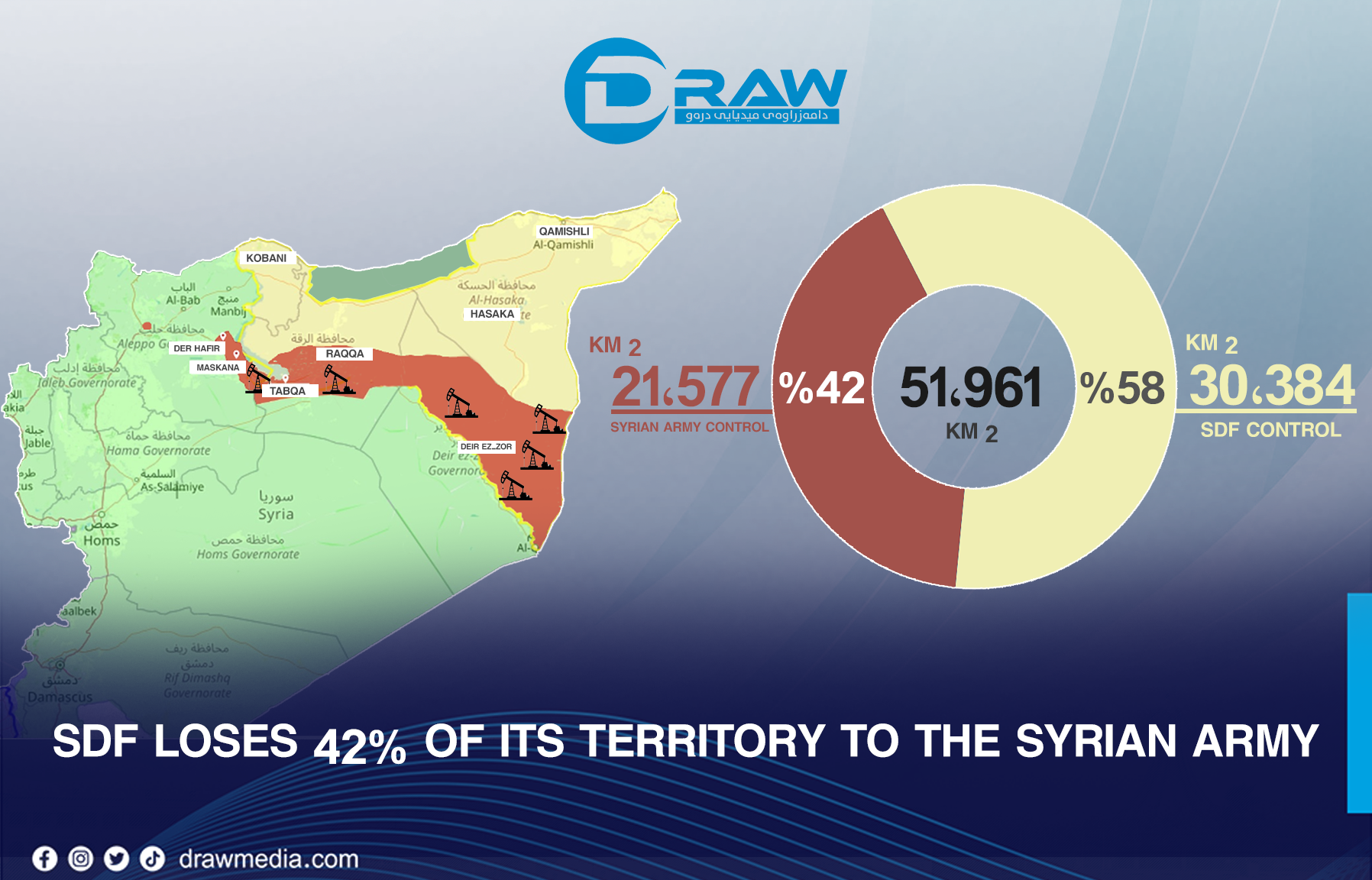
SDF loses 42% of its territory to the Syrian Army
بڵاوکراوەتەوە لە : 19 کانوونی دووەم 2026
قەبارەی دەقەکان
قەبارەی دەقەکان
هەواڵ
بڵاوکراوەتەوە لە : 19 کانوونی دووەم 2026
قەبارەی دەقەکان
قەبارەی دەقەکان
Report: Drew Media
Edited and translated by Karwan Khoshnaw
Syrian Democratic Forces lose more than 40 percent of territory in rapid battlefield reversal
The Syrian Democratic Forces (SDF) have lost more than two-fifths of the territory they once controlled in northern and eastern Syria, following a swift series of military setbacks over the past two weeks.
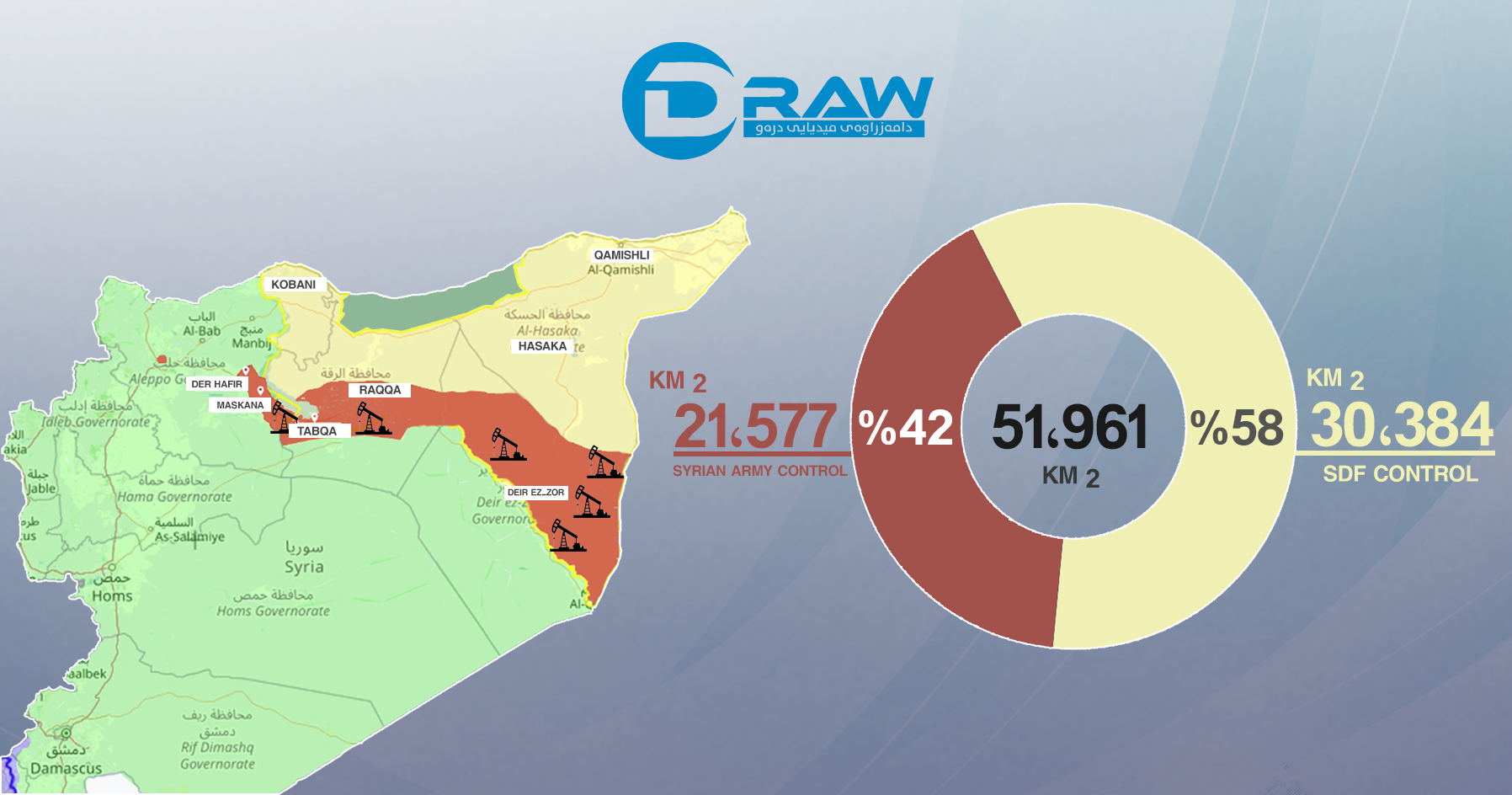
According to figures compiled from the ground, the SDF have lost around 21,500 square kilometres out of a total 51,961 square kilometres they previously held, a contraction of approximately 42 percent. The losses include two governorates and at least 12 cities and towns, leaving the force in control of just one governorate and three cities.
The collapse in territorial control follows fighting that began in the predominantly Kurdish neighbourhoods of Sheikh Maqsoud and Ashrafiyeh in Aleppo and rapidly expanded eastwards, culminating in the loss of Raqqa and large parts of Deir ez-Zor, areas long regarded as the SDF’s strategic and economic backbone.
Leadership response and regional dynamics
The SDF’s commander-in-chief, Mazloum Abdi, said the confrontation had been imposed on his forces, arguing that the SDF had relied heavily on international backing to defend what he described as the political project of Kurdish self-administration in northern Syria.
He blamed the offensive on a Turkish-led strategy, implemented through Syrian government forces and Turkish-backed armed groups, carried out with what he characterised as tacit American approval, Israeli silence, and acquiescence from several Arab states.
Neither Turkey nor United States has publicly endorsed that characterisation.
Shifting control across Syria
Syria’s total land area is approximately 185,180 square kilometres. Before the latest fighting, control was divided broadly as follows:
• Syrian government forces: 69.3 percent
• SDF: 27.8 percent
• Druze-controlled areas: 2.8 percent
• Israeli-held Golan Heights: 0.1 percent
The SDF’s territory was spread across four governorates: Hasakah, Raqqa, Deir ez-Zor, and Aleppo.
Heavy losses in Raqqa and Deir ez-Zor
The most severe reversals have occurred in Raqqa Governorate, where SDF-held territory has shrunk from around 11,700 square kilometres to just 3,300 square kilometres, a loss of 8,400 square kilometres. The city of Raqqa and the town of Tabqa, once central to SDF control, have fallen, along with key infrastructure including dams, a power station, and energy facilities.
In Deir ez-Zor Governorate, the SDF previously controlled about 14,527 square kilometres, including the provincial centre. That figure has now dropped to roughly 3,500 square kilometres, meaning a loss of more than 11,000 square kilometres. The governorate contains most of Syria’s major oil and gas fields, making the setback both militarily and economically significant.
Aleppo and Hasakah: reduced but holding
In Aleppo Governorate, SDF control has declined from around 5,400 square kilometres to 3,250 square kilometres, following the loss of Deir Hafir, Maskanah, and the Sheikh Maqsoud and Ashrafiyeh neighbourhoods. The city of Kobane and the strategically important Tishrin Dam remain under SDF authority.
By contrast, Hasakah Governorate has seen more limited changes. Although around 3,000 square kilometres in the north are controlled by Turkish-backed groups, the SDF still hold approximately 20,334 square kilometres, including Qamishli and the al-Hol camp, one of the largest detention sites for suspected Islamic State affiliates and their families.
Strategic infrastructure lost
Among the most consequential losses are major energy and water assets now under Syrian government control, including:
• Tabqa Dam on the Euphrates, completed in 1973 and capable of storing 11.6 billion cubic metres of water
• Freedom Dam (al-Thawra), built in 1981
• Tabqa power station
• Key oil and gas fields in Deir ez-Zor and Raqqa, including Conoco, al-Omar, Tanak, and Thawra
Together, these facilities once generated tens of thousands of barrels of oil per day and supplied electricity and water to large parts of northern Syria.
Changing loyalties on the ground
Much of the territory lost by the SDF is predominantly Arab-populated. Local sources indicate that significant numbers of Arab fighters previously aligned with the SDF have defected during the fighting, switching allegiance to Syrian government forces and pro-Damascus militias.
This shift has accelerated the collapse of SDF control in mixed and Arab-majority areas, exposing the limits of the group’s authority beyond its Kurdish heartlands.
Uncertain future for SDF autonomy
Attention is now focused on a possible agreement between Ahmed al-Sharaa and Mazloum Abdi. Analysts warn that, if implemented in full, such a deal could lead to further territorial concessions and potentially bring an end to the SDF’s administrative autonomy, military independence, and self-governing structures.
For now, the SDF remain in control of significant pockets of territory, but the scale and speed of recent losses mark one of the most serious challenges the group has faced since its rise during the war against Islamic State.