By: Hawre Tofiq
It is clear that, due to the war, the Strait of Hormuz has been closed, significantly restricting oil exports and causing a sharp decline in public revenues. As a result, the federal government is facing a crisis in financing its operational budget, particularly the payment of public sector salaries. To address this situation, it has taken the following steps:
1. Printing More Iraqi Dinars
During Prime Minister Mohammed Shia' Al-Sudani's government, additional Iraqi dinars have been printed to pay salaries. While this measure has helped solve the immediate problem of salary payments, it could lead to long-term inflation because of the increased money supply.
2. Two Additional Plans Under Consideration
The government is now considering two further options:
First: Domestic and foreign borrowing.
Second: Removing three zeros from the Iraqi dinar.
The Iraqi government is reportedly considering deleting three zeros from the national currency. For example:
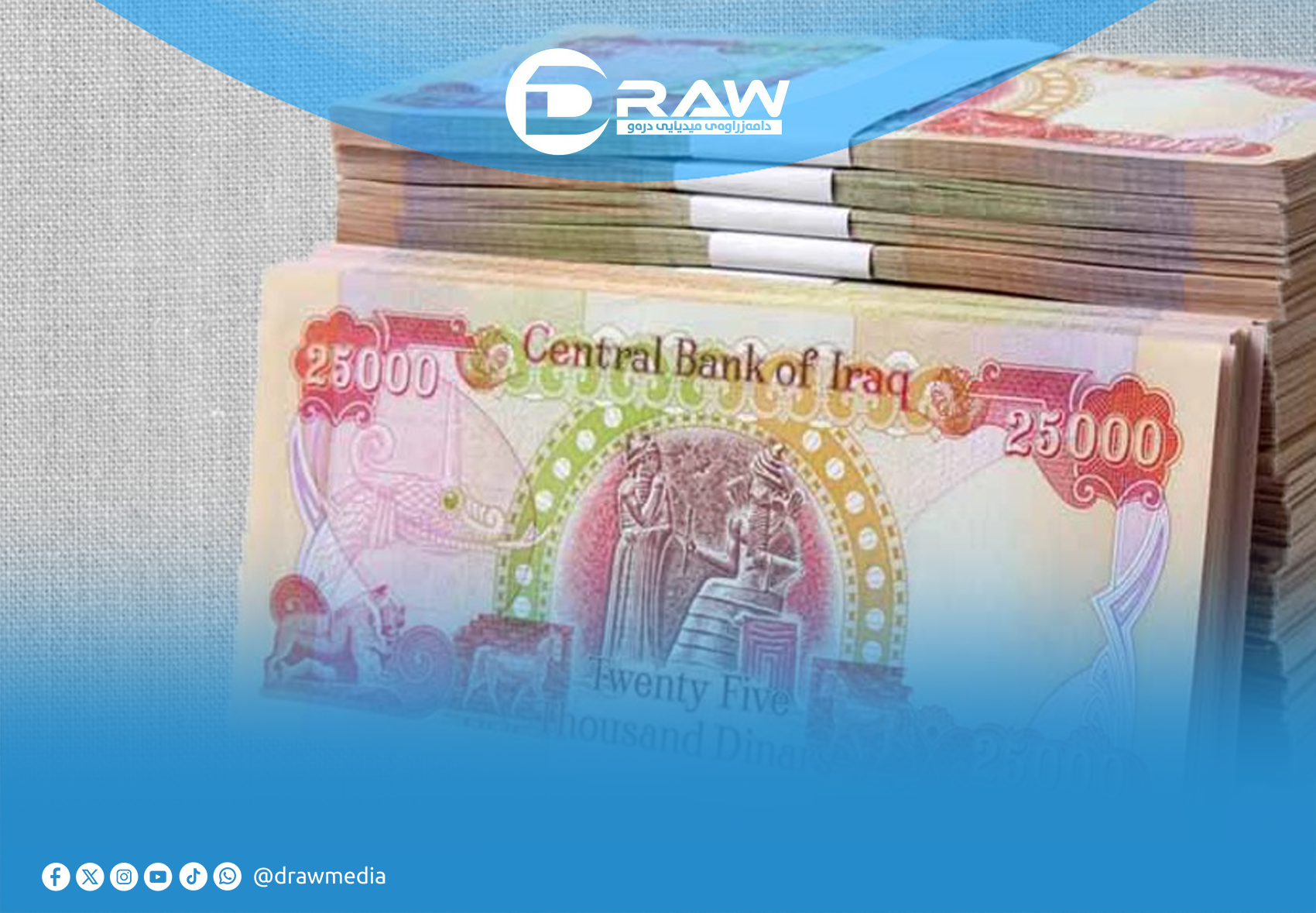
25,000 Iraqi dinars would become 25 dinars after removing three zeros.
Likewise, all other currency denominations would be adjusted accordingly.
Instead of expressing figures in billions, they would be expressed in millions.
The objective of this move is to preserve the value of the Iraqi dinar. Since a large amount of currency has already been printed, the government fears inflationary pressure. It also intends to revalue the exchange rate against the U.S. dollar. For example, after removing the three zeros, US$100 could be exchanged for 150 Iraqi dinars instead of the current denomination. The government also believes this measure could help reduce the apparent size of operational budget expenditures, including salaries.
3. Legal and Constitutional Requirements
Monetary and financial policy requires legal backing. The proposal to remove three zeros from the Iraqi dinar would normally require legislation, making it a politically sensitive issue that may be difficult to pass in Parliament.
To address this, the government has explored another legal route. The Prime Minister requested that the Federal Supreme Court of Iraq issue an interpretive ruling regarding the powers of the Council of Ministers under Article 80, Paragraph Third of the Iraqi Constitution, which authorizes the Council to issue decisions, regulations, and instructions.
The Prime Minister asked whether the Council of Ministers could issue regulations and instructions even if Parliament had not explicitly delegated that authority in a specific law.
The Federal Supreme Court ruled that, regardless of whether a law expressly grants such authority, the Council of Ministers possesses an inherent constitutional power to issue regulations, instructions, and decisions.
This ruling opens the door for the government to proceed with removing the three zeros from the Iraqi dinar through a governmental regulation, without first obtaining parliamentary approval. That this is a highly technical monetary and financial issue that deserves careful analysis and discussion by financial and economic experts.