
Iraqi sovereignty is not real
بڵاوکراوەتەوە لە : 10 تشرینی یەکەم 2026
قەبارەی دەقەکان
قەبارەی دەقەکان
بڵاوکراوەتەوە لە : 10 تشرینی یەکەم 2026
قەبارەی دەقەکان
قەبارەی دەقەکان
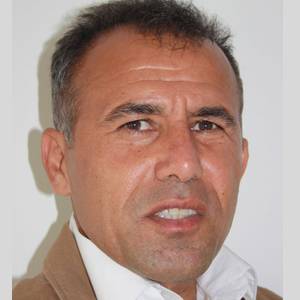
Sardar Aziz
On September 30, the Iraqi government celebrated regaining its sovereignty, as the Global Coalition to defeat ISIS, locally called the American troops, withdrew from Iraq. The withdrawal deal, which took approximately a year to implement, was negotiated with the previous Iraqi government, according to two members of the small US negotiating team.
It is not the first time Iraq has celebrated a sovereignty day. Iraq has celebrated this momentous occasion attached to foreign troop withdrawal once a decade for the last three decades. On November 13, 2011, when Obama decided to leave Iraq, Iraq likewise celebrated the event as the country regained sovereignty. Prior to that, on June 28, 2004, there was another celebration of sovereignty during Ayad Allawi’s premiership.
There is no doubt that the concept of sovereignty, whether that is supreme public power with the right and the capacity to impose its authority, or a question of who holds legitimate power and recognized authority, is complex.
In 2021, Ibrahim Bahr Al-Uloom, Director General of the Bahr Al-Uloom Charitable Foundation and Al-Alamein Institute for Graduate Studies, edited the book Iraq’s Sovereignty Crisis: The First Document to Discuss the Concept of National Sovereignty (2004-2020). The book title was a clear indication that Iraqi sovereignty was unstable throughout that period.
The book interviewed all the former Iraqi prime ministers up to that date, and the questions posed to the former heads of government were tied to the relationship between the political system and sovereignty, along with achievements of, or violations of, sovereignty as related to the management of regional and international factors, the relationship between national interests and determination of sovereignty, and regional and international interests and sovereignty. The final question posed to the former prime ministers explored each of their respective experiences.
The questions focused on Iraqi sovereignty from the angle of the state’s political system, the state’s relation to regional power, and the state’s awareness and capacity to manage crises. This state-centric view was likewise prevalent among the answers. All PMs held a state-centric perspective and failed to mention other types of sovereignty – such as internal sovereignty, external sovereignty, de jure sovereignty, de facto sovereignty, or Westphalian sovereignty and issues such as the complex relationship between the sovereign and the emergency, when the state may decide to disregard law.
The latest celebration is full of contradictions and ambiguity. Officially, the Allied powers and Americans were categorized as friendly; hence, they were not seen as occupiers except by a number of militias known locally as “fasa’il” (فصائل, in Arabic) – referring to the militias that are outside the jurisdiction and control of the state. These militias, by virtue of their existence as extra-legal entities, jeopardize the sovereignty of the Iraqi state. Nonetheless, they consider themselves to be the real defenders of sovereignty.
It is therefore not surprising if the Iraqi ruling elites see sovereignty only as a negative sovereignty. The latter has two aspects: one, the negative means the absence of other powers’ interference, and two, as Robert Jackson puts it in Imperialism, Sovereignty, and the Masking of International Law, the creation of many states that lack the institutions that would make sovereignty impactful in any real sense.
Iraqi sovereignty can be celebrated, but the fact is that celebrating a form of sovereignty that has no bearing on domestic and foreign affairs is a moot point if all aspects of sovereignty are not considered.
For Iraq, one worrying aspect of sovereignty that is pushed is the absolute Westphalian or the Chinese-style sovereignty, which stipulates that the state, or those who claim the authority of the state, are always right; amounting to absolute power. In other words, achieving sovereignty as a way of exercising the right to kill. As criticized by Mbembé in Necropolitics, this approach imagines politics as a form of war; a form of state sovereignty that was practiced by the former Baathist regimes in Iraq and Syria.
In post-Saddam Iraq, the Necropolis did not disappear, as it became vividly obvious during the Tishreen demonstrations.
Washington’s man in Baghdad
Washington’s reaction to the withdrawal and departure of its troops is tangled with the Trump administration’s own domestic calculations. Hence, Trump’s statement reflected a sense of relief: “We left Iraq after 23 years, and billions and billions of dollars were spent.”
With elections set for November 2026, it is reasonable to argue that Trump reframed the withdrawal to make it part of the Republicans’ midterm campaign. Trump stated the Iraqi PM “was not doing particularly well” in the election, but he endorsed him, a sentence that has no bearing in reality. Additionally, Trump wanted to contrast the withdrawal from Iraq with the withdrawal from Afghanistan, as he said, “We took everything with us: every nut, every bolt, every screw, every tank, every plane.”
Throughout Trump’s statement, there was no talk about the state of Iraqi society, politics, and economy. What was noted was that the man now in charge in Baghdad is apparently Washington’s man.
Despite pro-Iraqi statements from Tom Barrack – US ambassador to Turkey and special Syria envoy who has also been involved in Kurdish and Iraqi affairs – Washington has no problem dumping Iraq, and there seems to be no clear future approach to Iraq on the table, a close observer of the Iraq-US relation in Washington told The Amargi.
There appear to be two schools when it comes to Iraq: on the one hand, there is the US Secretary of State Marco Rubio, who warned that Iraq risks “Balkanization” unless its armed factions are brought under state control. On the other hand is Tom Barrack, who advocates giving Baghdad time. These all indicate that real sovereignty is far from achieved.
Iraq’s obsession with sovereignty is understandable, given the country’s turbulent history. However, currently, Iraqi self-rule remains unstable and insecure and relies heavily on external validation rather than internal stability.
The main pillar of sovereignty is legitimacy, and Iraqi sovereignty is not an achievement marked as complete from one day to the next, nor is it established through public holidays or celebrations. It is a process of building a real institution to enable a people to be sovereign. Sovereignty should not be an abstract notion but should find ownership in the most concrete collective “we”, through which each and every person can give his or her positive consent to the decisions taken and the policies designed.