Urgent Official Memorandum to the United Nations and International Human Rights and Environmental Organizations
To: All international organizations and institutions dedicated to protecting human rights and preserving the environment
Subject: Human Rights Violations and Ecocide in the Kurdistan Region
We, the Human Rights Commission and the Environmental Commission of the Kurdistan National Congress (KNK), express our profound concern to the international community and strongly condemn the escalating military attacks carried out this year by the Iranian regime and its allied armed groups against the land, forests, and environment of the Kurdistan Region of Iraq.
These continuous attacks are taking place despite the fact that neither the civilians of the Kurdistan Region nor the opposition parties from Eastern Kurdistan are parties to the conflict between external forces (the United States–Israel and Iran).
Through this memorandum, we draw the attention of the international community to official statistics, evidence concerning the use of prohibited weapons, and the devastating humanitarian and environmental consequences of these attacks.
First: Statistics on Missile and Drone Attacks Against the Kurdistan Region of Iraq (Through July 2026)
According to official reports and field investigations, the scale of attacks since the beginning of 2026 has reached unprecedented levels.
Official KRG Statistics: According to the Kurdistan Regional Government's Media and Information Office, between February 28 and April 20, 2026, the Kurdistan Region was targeted by 809 attacks, including 701 suicide drones and 108 missile strikes.
CPT-IK Statistics: The Community Peacemaker Teams in Iraqi Kurdistan (CPT-IK) reported that during the first three months of the conflict (February 28–May 28, 2026), 751 attacks were recorded. Of these, 298 attacks were carried out by Iran's Islamic Revolutionary Guard Corps (IRGC), while 453 attacks were conducted by Iraqi armed groups allied with Iran.
Latest Figures Through July 2026: According to media monitoring, the total number of drones and missiles launched against the Kurdistan Region since the outbreak of the conflict has exceeded 900 attacks, reaching more than 927 attacks. Most targeted Erbil Governorate, areas surrounding coalition bases, and camps belonging to Iranian Kurdish opposition parties.
Second: Use of Prohibited Weapons (White Phosphorus) and Burning of Victims
For the first time during this conflict, evidence has emerged indicating the use of prohibited chemical substances by the IRGC.
July 19, 2026 Incident
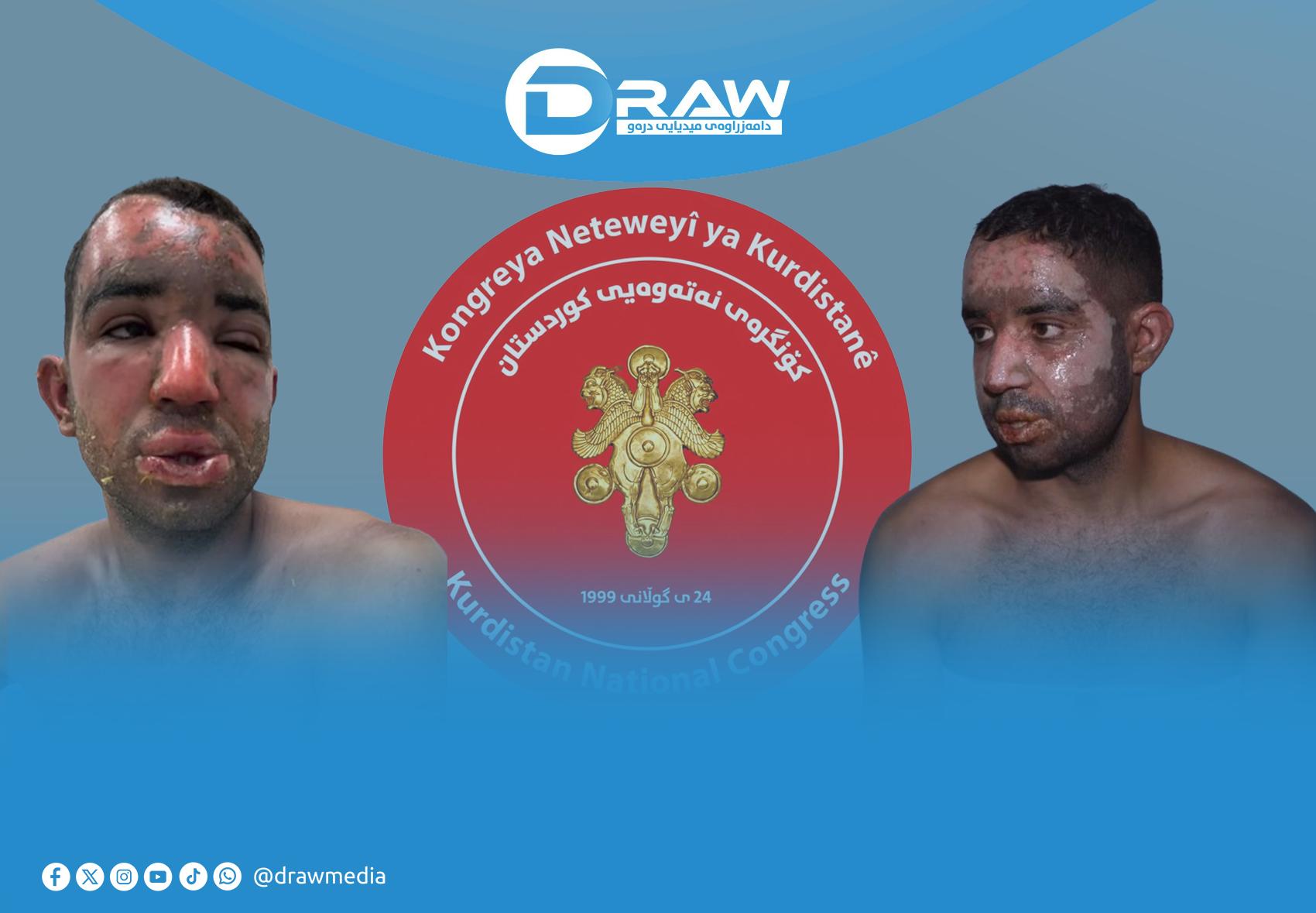
The Kurdistan Freedom Party (PAK) officially announced that during an IRGC drone strike carried out in the early hours of July 19, 2026, against one of its bases near Darashakran, west of Erbil, munitions containing white phosphorus were allegedly used. Nine people were injured, and photographs of several victims were attached as evidence.
Medical Evidence
During the attack, nine Peshmerga fighters suffered severe second- and third-degree burns, extending to the bone, accompanied by symptoms consistent with chemical exposure.
According to PAK, preliminary medical examinations and observations of the persistent fires at the attack site strongly suggest the presence of a prohibited chemical substance.
Third: Environmental Catastrophe and Ecocide
The attacks by Iran and its allied armed groups have caused long-term destruction to Kurdistan's natural environment.
1. Fire on Mount Goyzha (July 20, 2026)
Continuous fires destroyed hundreds of dunams of forests and natural tourist areas on Mount Goyzha in Sulaymaniyah due to military activity.
No military or political installations existed on the mountain.
The IRGC officially claimed responsibility for the attack.
2. Destruction in Zargwez (July 17, 2026)
Following a missile attack on the Komala camp in Zargwez, Sulaymaniyah, where 10 Peshmerga fighters were killed or injured, hundreds of dunams of orchards, vineyards, and agricultural lands belonging to civilians were burned, causing substantial financial losses for local farmers.
3. Soil and Water Contamination by White Phosphorus
White phosphorus can remain stable in low-oxygen soils for decades. Once the soil is disturbed through cultivation, it can reignite.
When introduced into water, it does not readily dissolve and can remain toxic for long periods, poisoning aquatic life and wild birds. Through the food chain, these toxic effects can ultimately reach humans.
It also causes soil acidification, preventing plant growth and rendering agricultural land unsuitable for cultivation.
Such widespread environmental destruction is internationally recognized as ecocide.
Fourth: Legal Status of These Attacks Under International Law
Under Protocol III of the Convention on Certain Conventional Weapons (CCW), the use of incendiary weapons—including white phosphorus when employed as an incendiary weapon—against civilians or within densely populated civilian areas is strictly prohibited and may constitute a war crime.
Requests of the Human Rights and Environmental Commissions to the International Community
We call upon the UN Human Rights Council Fact-Finding Mission to conduct an independent international investigation into these attacks.
We urge the Organisation for the Prohibition of Chemical Weapons (OPCW) to establish an independent investigation team to conduct medical and field examinations of the July 19, 2026 incident in Darashakran in order to formally determine whether white phosphorus was used.
We request the United Nations Environment Programme (UNEP) to assess the environmental damage caused in the Kurdistan Region.
We call on the Government of Iraq to officially register these attacks with the United Nations, safeguard the sovereignty of Iraq and the Kurdistan Region, and exert diplomatic pressure on Iran to immediately halt attacks against civilians, refugees, and the environment of the Kurdistan Region.
We express our appreciation for your continued efforts to protect human rights and the environment.
Respectfully,
Human Rights Commission
Environmental Commission
Kurdistan National Congress (KNK)