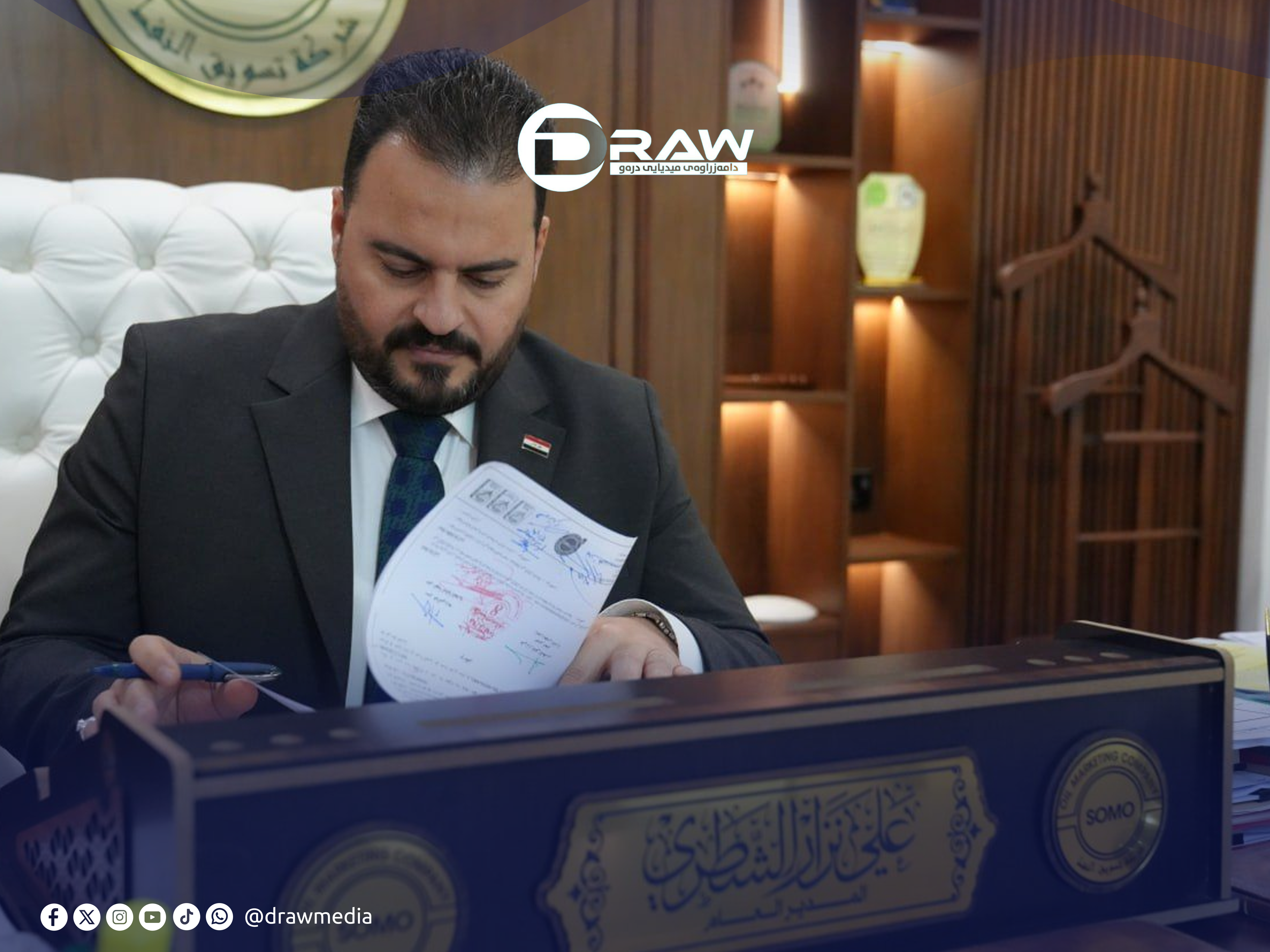
Ali Nizar Shatri, Director General of SOMO, stated that with the outbreak of the U.S. (Israel)-Iran war, threats and fears began to rise regarding any direct or indirect targeting of oil tankers and their owners heading to southern Iraqi ports—even before the Strait of Hormuz was actually closed.
In a statement published by the Iraqi News Agency, the SOMO chief explained that based on loading schedules prepared in anticipation of the war against Iran, authorities began closely monitoring Iraqi oil buyers through southern outlets, including Basra’s oil ports and offshore terminals, while increasing the number and capacity of oil tankers in waiting zones to ensure the longest possible continuity of exports.
“We managed to continue exports from southern ports until March 8, achieving a relatively strong performance compared to countries whose exports from the Arabian Gulf basin were immediately halted. We also exported larger volumes of crude from the Kurdistan Region after reaching an agreement with the Kurdistan Ministry of Natural Resources to use the Iraq–Turkey pipeline for exporting Kirkuk oil.”
According to the SOMO chief, “All departments of the Oil Ministry, along with southern and northern companies and SOMO, worked intensively to transport Basra oil at a rate of 170,000 barrels per day, later increasing it to 200,000–250,000 barrels per day toward northern Iraq, along with boosting Kirkuk oil supplies for export. This is due to its medium-grade quality and favorable pricing, after which it is shipped via Turkey’s Ceyhan port to European and American markets.”
The total oil exports from Basra, the Kurdistan Region, and Kirkuk in March reached nearly 18 million barrels, with revenues rising by 28% compared to February, when revenues were close to $2 billion.
The SOMO director added that the Oil Ministry is working to meet companies’ demands for exports via tanker trucks, with some companies bringing in tankers from Jordan and Syria to increase export capacity, although pipeline exports remain more efficient and stable.
“The ministry is currently focusing on exporting residual fuel oil (black oil) to ensure refineries continue operating and to maintain domestic supply, especially gasoil for power plants, given the risk of reduced Iranian gas supplies.”
Regarding the Iraq–Turkey pipeline (Kirkuk–Ceyhan), he said: “Repairs are nearing completion, with only about 200 kilometers left to be tested. Completion is expected to be announced within the coming days.”
On the Kurdistan pipeline, he noted that after joint coordination with the Kurdistan Regional Government, an agreement was reached to reactivate the pipeline passing through the region toward Turkey’s Ceyhan port. This has significantly increased Kirkuk crude exports following its reactivation, in addition to the oil already pumped from the Kurdistan Region.
He clarified that Kurdistan’s oil output is currently lower than previous levels due to security risks affecting some oil fields, which previously produced around 400,000–450,000 barrels per day but have now dropped to about 200,000 barrels per day.
“Other pipelines the ministry is seeking to activate are not new, as work on them has been ongoing for a long time. Several committees have been formed, most notably a negotiation committee with Turkey to increase exports via Ceyhan, and a committee for Iraq–Syria pipelines aimed at boosting export capacity through western outlets and reaching Syrian ports. Another goal is to access Lebanese ports (Tripoli), which is not possible without passing through Syria.”
He added, “Increasing pumping capacity toward Syria was one option, alongside maintaining the option of transporting crude via tankers.”
He confirmed that negotiations with Turkish and Syrian sides are ongoing. The first convoy of fuel oil tankers from the Shuaiba, Dora, and Samoud refineries has already departed toward Syria and safely reached Syrian ports. A contract has been signed to export 50,000 barrels per day via Syria to the Mediterranean.
In conclusion, he stressed that this crisis has opened new avenues for Iraqi oil exports that will remain in use even after the crisis ends. “We are currently negotiating to benefit from some Gulf countries’ pipelines that extend beyond the Strait of Hormuz and into the Arabian Sea, so that our oil can reach global companies at competitive prices.”