The Gap Between Budget Entitlements and Actual Federal Transfers
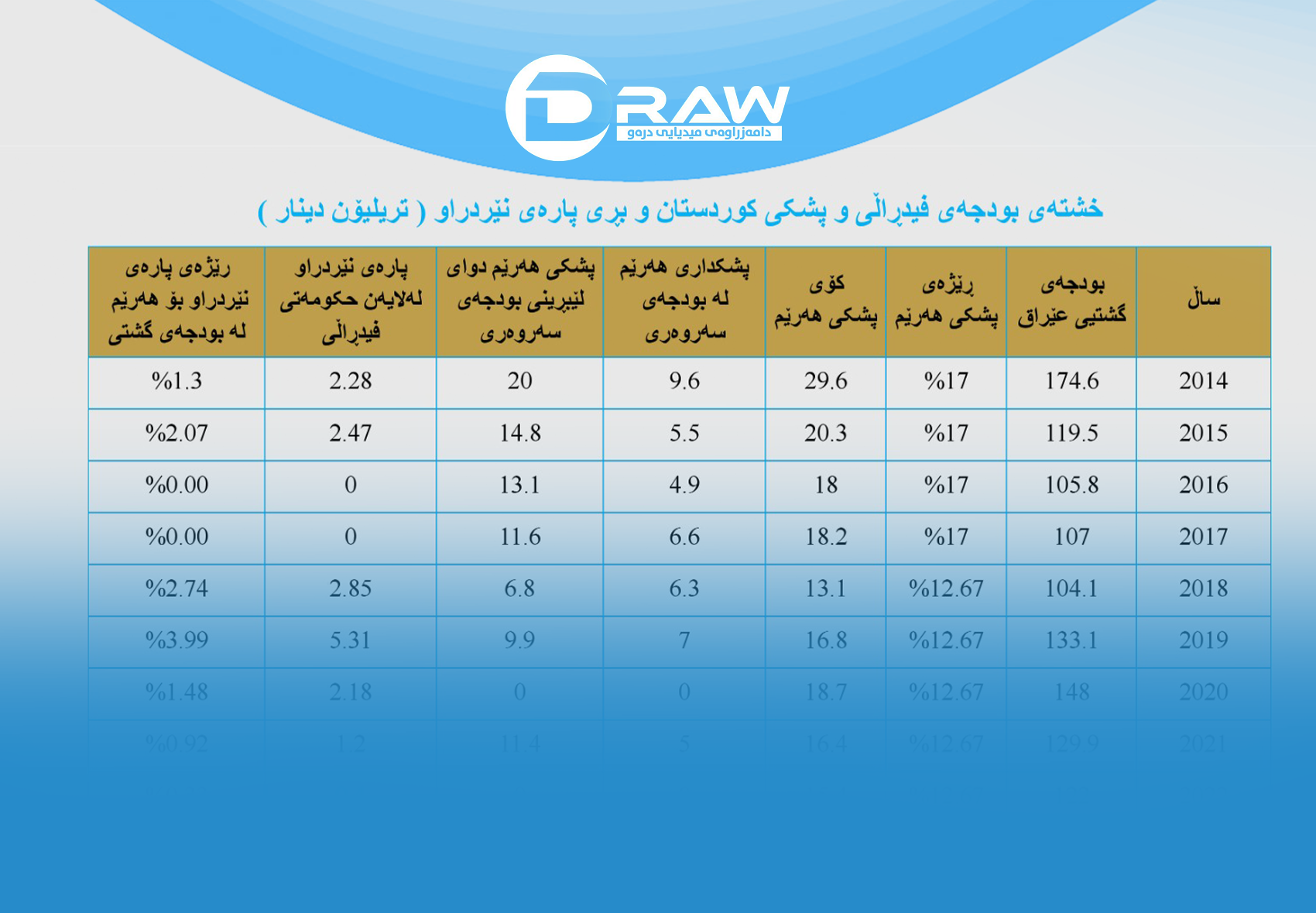
The report highlights a significant discrepancy between the financial resources the Kurdistan Region was entitled to receive under federal budget legislation and the amounts actually transferred by Baghdad. Although the Region's estimated entitlement reached approximately 146 trillion Iraqi dinars between 2014 and 2025, actual federal transfers amounted to only 41 trillion dinars. This represents a considerable difference between the legally calculated allocations and the funding received in practice.
The Impact on Public-Sector Salaries
The report estimates that the 41 trillion dinars transferred during the 12-year period were equivalent to approximately 46 months of public-sector salaries out of a total of 144 months. In practical terms, the funds received covered the equivalent of less than four years of salary payments over the entire 12-year period. This illustrates the extent of the funding gap and its implications for public employees in the Kurdistan Region.
Changes in the Kurdistan Region’s Share of the Federal Budget
The report identifies a reduction in the Region's budget allocation over the years. Between 2014 and 2017, the Kurdistan Region's budget share stood at 17%, before being reduced to 12.67% in subsequent years. However, the report estimates that actual federal transfers to the Region represented an average of only 2.04% of total federal budget expenditure. These figures illustrate the difference between the Region's designated budget share and the proportion of federal funds it reportedly received.
Population Share and Budget Allocations
According to statistics attributed to Iraq's Federal Ministry of Planning, the Kurdistan Region represented approximately 14.14% of Iraq's total population in 2024. The report argues that federal budget transfers have not adequately reflected this demographic proportion, raising questions about the criteria used to determine the Region's financial allocations.
Sovereign Expenditures and the Kurdistan Region’s Financial Contribution
Another important issue raised in the report concerns the calculation and distribution of sovereign expenditures within Iraq's federal budget. The Kurdistan Region contributes to financing federal sovereign expenditures, while its budget entitlement is calculated using a 12.67% allocation rate. Under Iraq's 2023–2025 three-year budget framework, sovereign expenditures accounted for approximately 23% of total federal budget spending, with their combined value estimated at 142.3 trillion dinars over the three-year period.
The report argues that the Region's contribution to these expenditures should be calculated according to its 12.67% budget share rather than treating the entire 23% sovereign expenditure allocation as the basis for determining its financial obligations.
The Financial Consequences of the Sovereign Expenditure Formula
According to the report's calculations, the method used to determine the Kurdistan Region's contribution to sovereign expenditures resulted in an estimated difference of 8.2 trillion dinars over the 2023–2025 budget period. This represents an estimated annual difference of approximately 2.7 trillion dinars. The report maintains that the current calculation method places a substantially greater financial burden on the Kurdistan Region than the proportional approach it proposes.
It also points out that the Region has not received corresponding allocations for its Ministry of Peshmerga Affairs or its share of Iraq's domestic and external debt obligations, despite contributing to the financing of federal defence and debt-related expenditures.
Overall Assessment
The report presents the Kurdistan Region's financial difficulties as an issue extending beyond disagreements over compliance with federal budget requirements. It attributes the ongoing funding and salary-payment challenges to persistent differences between the Region's budgetary entitlements and actual federal transfers, as well as disagreements over the calculation of sovereign expenditures and the distribution of financial responsibilities between Baghdad and Erbil.
According to the report, these issues have contributed to recurring financial uncertainty and disruptions in public-sector salary payments throughout the period under review.
Source: Kurdistan Regional Government – Department of Media and Information. Published November 7, 2026.