🔻 Analysis: Attaqa Platform (منصة الطاقة)
🔹 The import of a large shipment of American gasoline to Iraq marks a new shift in the country's fuel import map, especially given its reliance on imports from the UAE and India between January and the end of August 2026.
🔹 With the closure of the Strait of Hormuz, Iraq was forced to resort to importing from the United States, particularly amid the gasoline shortage crisis that has gripped the country for several months and deepened in recent days.
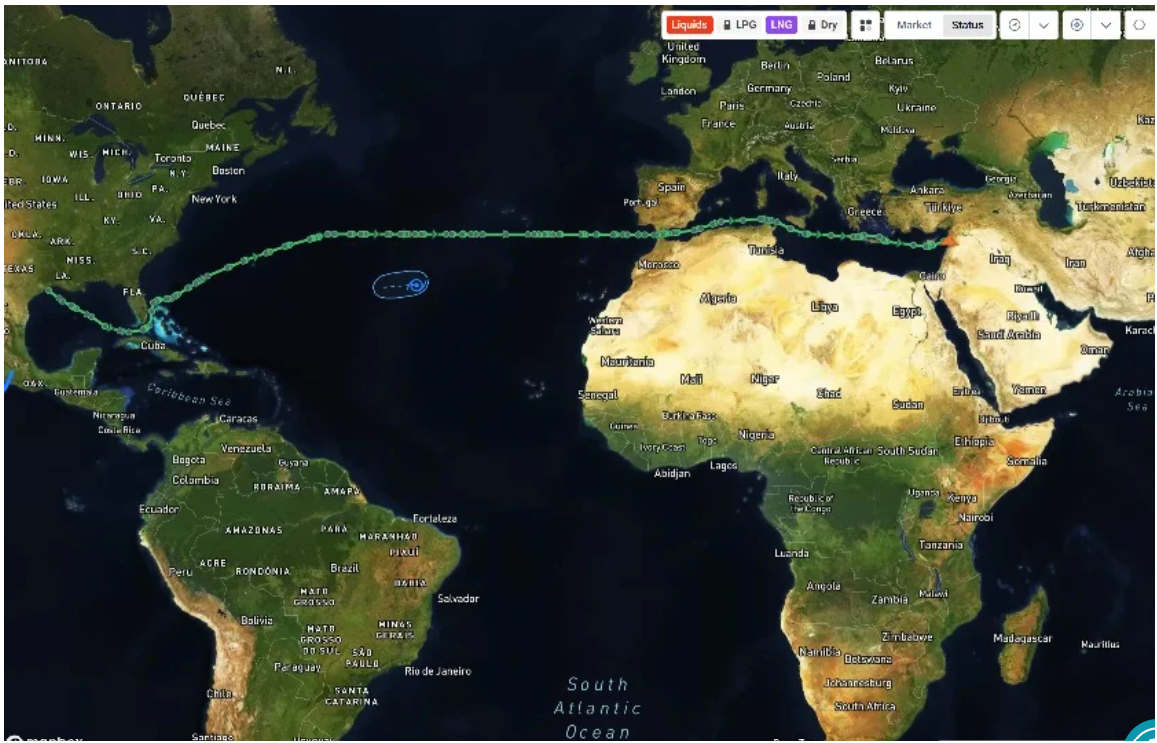
🔹 This shipment, which traveled a route of approximately (13,000) kilometers, may pave the way for importing more fuel shipments in the coming phase, especially in light of the good political relations between both countries and the U.S. administration's support for the government and assistance in attracting investment to the energy sector.
Last week, a historic shipment of gasoline arrived in Syria to be transported by tankers to Iraq; a development that may alter energy supply routes and usher in an unexpected new phase.
The Baniyas oil terminal welcomed the oil tanker "Gaita," flying the flag of the Marshall Islands, which arrived from the city of Houston in the United States after traveling a long-distance route of approximately (13,000) kilometers.
According to historical data available to the Attaqa platform, this shipment—estimated at around (234,000) barrels—is the first historic shipment to arrive in Syria from the United States.
In an exclusive statement to Attaqa, Safwan Al-Sheikh, spokesperson for the Syrian Oil Company, stated: "This shipment is not for Syria; rather, it is being transported by land tankers to Iraq as part of an agreement between the two countries."
He added that (3) oil tankers have arrived at Baniyas and will be unloaded to be dispatched to Iraq in the coming days.
Syria had not imported any crude oil or petroleum products from Washington in recent years due to U.S. sanctions imposed on the country since 1979, before they were lifted this year as part of Washington's support for Syria's new regime led by Ahmed al-Sharaa.
A Historic Shipment and Political Dimensions
The import of a large shipment of American gasoline to Iraq marks a new shift in the country's fuel import map, especially given its reliance on imports from the UAE and India between January and the end of August 2026.
With the closure of the Strait of Hormuz, Iraq was forced to resort to importing from the United States, particularly amid the gasoline shortage crisis that has gripped the country for several months and deepened in recent days.
This shipment, which traveled a route of approximately (13,000) kilometers, may pave the way for importing more fuel shipments in the coming phase, especially in light of the good political relations between both countries and the U.S. administration's support for the government and assistance in attracting investment to the energy sector.
Safwan Sheikh, spokesperson for the Syrian Oil Company, says: "This step is considered the first of its kind to embody direct economic cooperation and activate logistical corridors between both countries."
He noted that (3) oil tankers loaded with petroleum derivatives have arrived; the unloading of the first, carrying approximately (32,000) metric tons of gasoline—equivalent to (234,000) barrels—has been completed, while the other two ships await their turn to begin unloading.
According to data from the Energy Research Unit, Iraq's seaborne gasoline imports decreased in 2026 compared to the previous year, reaching a complete halt in March when the war with Iran broke out, as follows:
January: (6,000) barrels per day.
February: (26,000) barrels per day.
March: Zero.
April: (19,000) barrels per day.
May: (6,000) barrels per day.
June: (34,000) barrels per day.
July: (35,000) barrels per day.
August: (41,000) barrels per day.
Meanwhile, according to the Energy Research Unit, Syria imported only one shipment of gasoline in the first quarter of 2026, totaling (673,000) barrels, which came from Russia.
Since 2021, Syria has imported only (4 shipments) of gasoline, detailed as follows:
May 2025: (211,000) barrels.
June 2025: (32,000) barrels.
August 2025: (32,000) barrels.
January 2026: (673,000) barrels.