The Announced Unification: The Beginning of the Road
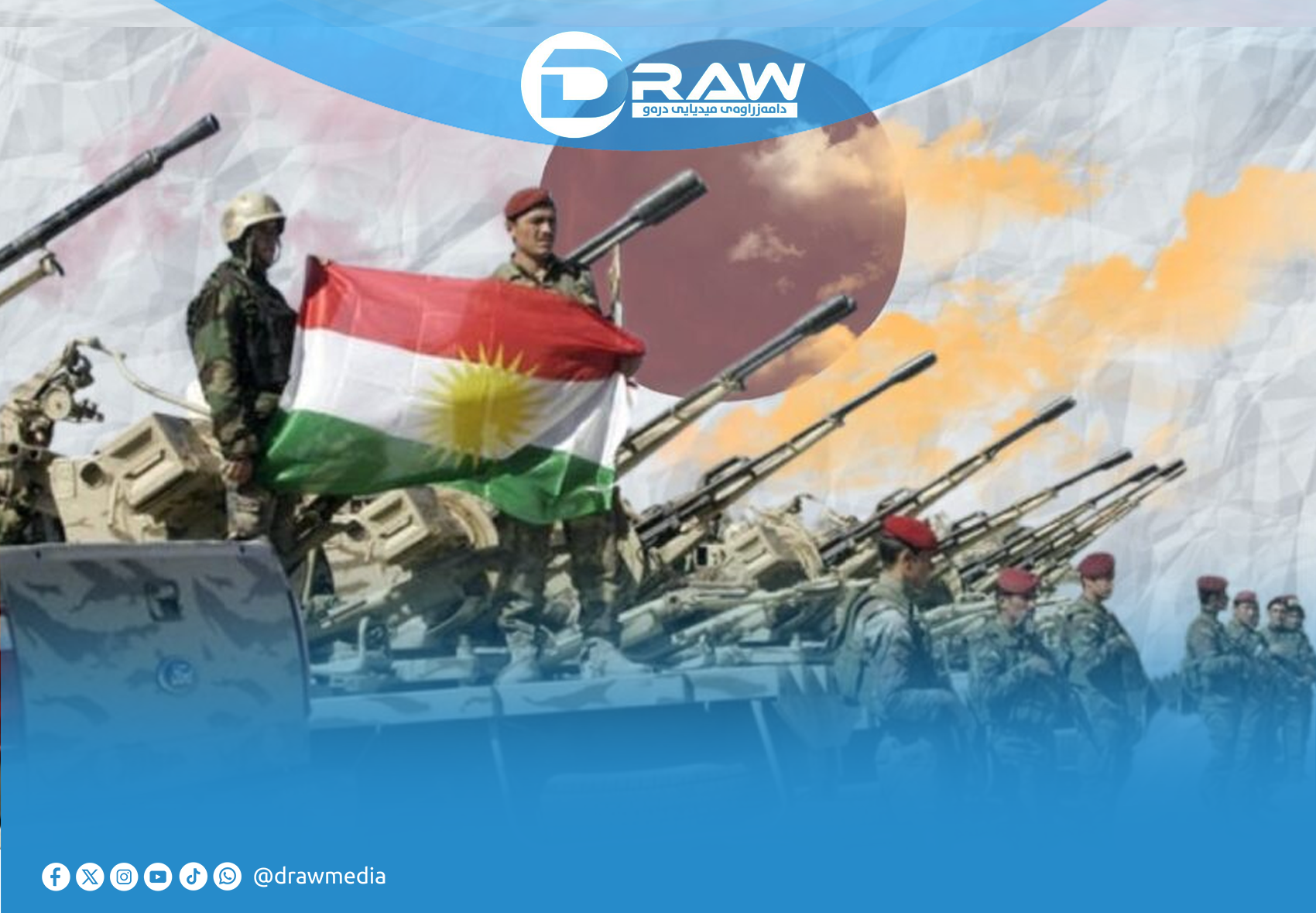
On September 10, Kurdistan Region Minister of Peshmerga Affairs Shorsh Ismail issued a statement announcing the completion of the process of unifying and reorganizing the Peshmerga forces under the ministry, describing it as a “great achievement that the people of Kurdistan have long dreamed of.”
The statement said that “after years of continuous efforts, all accumulated obstacles have been overcome and Forces 70 and 80 have been reunified.” As part of the reform, all forces were reorganized under a unified command-and-control structure, giving the Kurdistan Region a unified army under the direct command of the Ministry of Peshmerga Affairs.
Despite the importance of the announcement, it received limited attention from much of the region’s population and political and cultural elites. Opposition parties also largely did not address it in their frequent statements, even though unifying the forces had been a key demand for 30 years.
At the end of 2025, the Ministry of Peshmerga Affairs had announced the restructuring of the partisan forces under the ministry by establishing the First Regional Command, comprising Force 80 affiliated with the Kurdistan Democratic Party (KDP), and the Second Regional Command, comprising Force 70 affiliated with the Patriotic Union of Kurdistan (PUK). The two commands were tasked with managing and coordinating the forces’ field operations under a unified military structure.
Unification Announced, But the Field Will Be the Test
On September 21, during a ceremony marking the fourth anniversary of the 2022 memorandum of understanding between the Ministry of Peshmerga Affairs and the U.S. Department of Defense, Kurdistan Region President Nechirvan Barzani formally announced the completion of the unification of the Peshmerga forces.
Speaking at the ceremony, which was attended by Iraqi Army Chief Commander’s Office Director Abdul Amir al-Shammari, Barzani said: “This is not merely a change in structure and organization, or simply transferring units from one formation to another. It is a major national step in building the institutions of the Kurdistan Region.”
Under the announcement, tens of thousands of Peshmerga personnel from Forces 70 and 80 will join a unified military framework under the direct command of the Ministry of Peshmerga Affairs.
Barzani said Kurdistan needs “one force, one ministry and one command,” adding that the Peshmerga should be a national force free from party interference and disputes.
He stressed that unification “is not the end of the process, but the beginning of a new and potentially more difficult phase,” as it must be reflected in leadership, command, decision-making, training, organization, rights and duties, promotions, military doctrine and discipline.
Barzani also warned against turning the military institution into a field of political conflict, saying the Peshmerga should remain above partisan competition because it is a Kurdistan-wide force rather than a party force.
He further emphasized that the unified Peshmerga is part of the defense system of federal Iraq and called on the federal government to deal with the force in accordance with the constitution and fulfill its obligations and ensure its rights.
Unifying the Forces: The Field Will Be the Test
The announcement concerns around 150,000 Peshmerga personnel, the overwhelming majority of whom are affiliated with the two ruling Kurdish parties, the PUK and KDP, with a smaller number belonging to other parties.
The announcement was met with reservations from Kurdish opposition parties. New Generation Movement leader Shaswar Abdulwahid described the move as merely symbolic, arguing that forces in Sulaymaniyah remain affiliated with the PUK and those in Erbil and Duhok remain affiliated with the KDP.
He said changing the names of Force 80 to the First Region and Force 70 to the Second Region does not constitute genuine unification, which would require institutional and national loyalty rather than loyalty to political parties.
Kurdistan affairs writer Hussein Iskandar similarly argued that the Peshmerga have had a partisan structure since their establishment and that decades of institutional efforts have not fully removed the forces from party influence.
Constitutional Status and the Federal Position
Security and military experts quoted in the article warn that the partisan affiliation of Kurdish forces can create duality in security and military decision-making, particularly during political tensions.
An Iraqi security and military expert, who requested anonymity, said the Iraqi Constitution refers to “Region Guard Forces” rather than the Peshmerga in its current form. According to the expert, the forces’ mission, structure and chain of command differ from the constitutional framework, meaning the issue cannot be treated solely as an internal matter of the Kurdistan Region and requires coordination with the federal government.
The expert said the Constitution places the Region Guard Forces within the armed forces and under the authority of the Iraqi commander-in-chief.
The article also notes that Kurdish political forces reject any attempt to undermine the Peshmerga’s status, arguing that the forces are officially recognized under Article 121 of the Iraqi Constitution as the “Region Guard.”
The fifth paragraph of Article 121 states that the Kurdistan Region Government has authority over matters required for its administration, particularly the establishment and organization of internal security forces, including police, security and guards.
The Baghdad-Erbil Question
The article argues that fully resolving the Peshmerga issue within the constitutional framework would require political understanding between Baghdad and Erbil over the nature of the forces, their institutional affiliation and chain of command.
Iraqi National Security Adviser Qasim al-Araji has rejected classifying the Peshmerga as an armed faction, saying its weapons fall within the constitutional framework, while disarmament measures apply to armed groups operating outside the constitution and official institutions.
An Iraqi security expert quoted in the article said the main problem is the partisan division of the Peshmerga, noting that the forces remain practically influenced by the two main Kurdish parties and have previously been used in internal political disputes.
The Peshmerga Is Constitutional — The Dispute Is Over Its Partisan Structure
Kurdistan Parliament member Fatah Sankawi of the Kurdistan Islamic Union stressed the importance of placing the Peshmerga within an institutional framework and removing it from the influence of the two main parties.
He said state institutions and the Peshmerga should be permanent institutions belonging to the people rather than to any political party.
Kurdish political researcher Mahmoud Khoshnaw also rejected describing the Peshmerga as a partisan force, calling it a “national force” regardless of its current organizational mechanisms.
He said the Peshmerga has a history of nearly seven decades of confronting authoritarian regimes and protecting the Kurdish people, and played a major role in fighting ISIS after 2003.
The Legacy of the Partisan Divide
Political researcher Dr. Honar Haji Jasim said transforming the Peshmerga into a unified national military force is one of the major political and institutional challenges facing Kurdistan.
He argued that the issue is not solely military but also concerns the relationship between political parties, power and the institutions of the Kurdistan Region.
Jasim said one of the main obstacles to genuine and complete unification is the political interests of the two major parties, as relinquishing partisan control over the forces could be viewed as a loss of part of their historical political influence.
He also cited previous episodes of political and military conflict, including the events of August 31, 1996, October 16, 2017, and August 22, 2025, as examples of how political divisions can have security and military consequences.
From a Partisan Force to an Institutional Force
The Peshmerga traces its roots to the early stages of the Kurdish national movement and expanded following the outbreak of the Kurdish revolution in 1961 under Mustafa Barzani.
The forces fought multiple military confrontations with Iraqi governments and also participated in internal Kurdish conflicts, particularly during the armed conflict between the KDP and PUK in the 1990s.
During the Iran-Iraq War from 1980 to 1988, the Peshmerga fought the Iraqi army using guerrilla warfare tactics, while Kurdish soldiers from the Iraqi army also joined its ranks.
Following the 1991 Gulf War and the establishment of a no-fly zone over northern Iraq, the Kurds gained the ability to administer their areas outside Baghdad’s control. Parliamentary elections were held in the Kurdistan Region in 1992, followed by the formation of a joint government between the two main parties.
Between 1994 and 1998, a civil war broke out between KDP and PUK forces before ending with the 1998 Washington Agreement, brokered by the United States.
After 2003, Peshmerga forces cooperated with U.S. and British forces in military operations in Iraq and participated in operations against Ansar al-Islam and in securing strategic areas in northern Iraq.
In 2005, Iraq’s new constitution recognized the constitutional status of the Kurdistan Region and its institutions and provided for regional security forces within the constitutional framework of the Iraqi state.
Force Numbers and Equipment
The precise number of Peshmerga forces remains disputed between Baghdad and Erbil. Former Secretary-General of the Ministry of Peshmerga Affairs Lieutenant General Jabbar Yawar said the federal government could verify the number of registered personnel following the introduction of biometric registration, also known as the national number.
According to figures cited by Yawar, the Peshmerga has around 160,000 personnel, while other estimates, including one published by War on the Rocks, put the number at around 200,000 fighters.
The article notes that these estimates reflect differences among sources over the actual size of the force.
The Peshmerga uses a variety of military equipment, including tanks, artillery, armored personnel carriers, Humvees, anti-armor weapons and various types of missiles.
International Support for Unification
The unification of the Peshmerga has received attention from the United States and European countries since the war against ISIS, with international partners providing financial, technical and advisory support aimed at creating a professional, unified and reliable security partner.
The international coalition has repeatedly pressed the two ruling Kurdish parties to complete the genuine unification of the Peshmerga under a single national command.
Political researcher Honar Haji Jasim said unifying the Kurdish forces and pursuing institutional reform would increase international confidence and strengthen prospects for continued military cooperation.
The Future of U.S. and European Support
The article reports that the administration of U.S. President Donald Trump has informed leaders in the Kurdistan Region that it does not plan to renew the security assistance memorandum of understanding with the Peshmerga, according to Kurdish sources, as the agreement approaches its September 30, 2026 expiration date.
The memorandum, signed between the U.S. Department of Defense and the Kurdistan Regional Government, covers training, equipment, logistical and financial support, as well as a program to reform and unify Peshmerga formations under the Ministry of Peshmerga Affairs.
The article notes that the expiration of the memorandum does not necessarily mean an end to U.S. cooperation with the Peshmerga, as Kurdish sources indicate the possibility of moving to a new framework for security cooperation.
Political and Institutional Test
The article concludes that observers generally agree on the constitutional existence and importance of the Peshmerga in protecting the Kurdistan Region, while disagreement centers mainly on its institutional affiliation, chain of command and degree of independence from the two main Kurdish parties.
Critics argue that continued partisan division and the complete independence of Peshmerga decision-making from Baghdad could undermine the unity of Iraq’s security and military decision-making. Supporters, meanwhile, argue that the Iraqi Constitution recognizes regional security forces and that the main challenge is turning the announced unification into reality through a national institutional structure independent of partisan influence.
The future of the Peshmerga therefore remains linked to the ability of Baghdad, Erbil and political forces within the Kurdistan Region to establish a framework combining constitutional authority, unified military command and independence from partisan disputes.
Source: NIRIJ