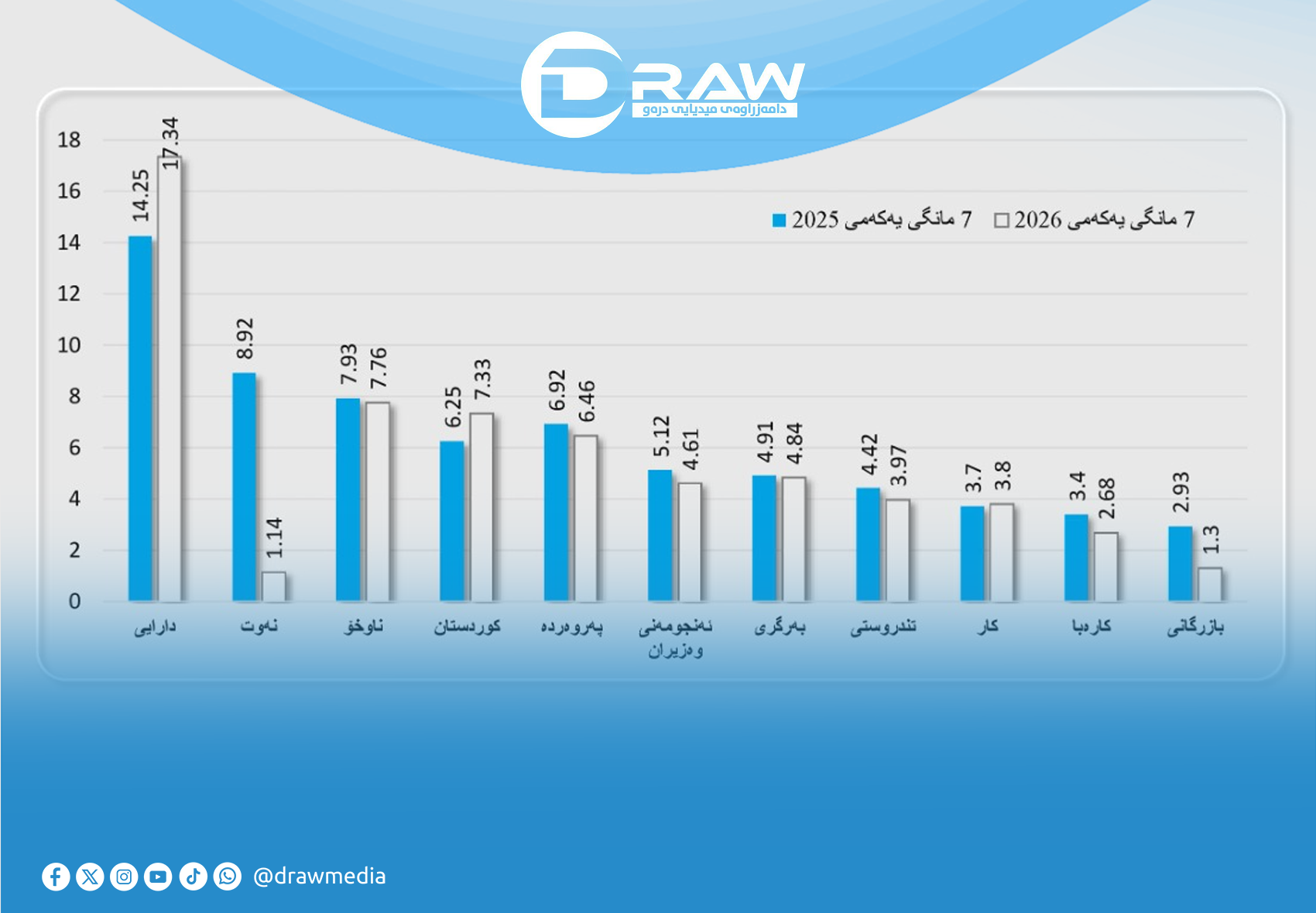
A comparison of Iraq’s actual revenues and expenditures for the first seven months of 2025 and 2026, based on Ministry of Finance accounting reports, highlights mounting fiscal pressures:
- Sharp widening of the deficit: The budget deficit rose from IQD 5.3 trillion by the end of July 2025 to IQD 29.2 trillion in the same period of 2026, while revenue coverage of expenditure dropped from 93% to 57%.
- Declining oil income: Oil revenues fell 53%, from IQD 65 trillion to IQD 30.4 trillion, reducing oil’s contribution to total revenues from 90% to 78%.
- Limited gains in non-oil revenues: Non-oil income grew 23.5% to IQD 8.7 trillion, supported by increases in taxes on goods (+55%) and public-sector profits (+19%). However, the additional revenue of IQD 1.7 trillion was insufficient to offset the IQD 34.6 trillion shortfall in oil revenues.
- Rising debt costs: Debt servicing more than doubled, climbing 109% from IQD 3 trillion to IQD 6.2 trillion. It became the country’s third-largest expenditure category, highlighting growing reliance on borrowing to finance the deficit.
- Salaries constrain fiscal flexibility: Employee salaries and compensation reached IQD 35.9 trillion, equivalent to 92% of total collected revenues. Combined with social welfare spending, these obligations accounted for nearly 79% of operating expenditure.
- Investment spending contracts: Actual investment expenditure fell by approximately 37%. Education spending declined 72%, while transportation and communications expenditure dropped 55%.
Conclusion: Iraq’s public finances face mounting strain as falling oil revenues widen the deficit and borrowing costs increase. Despite growth in non-oil income, meaningful fiscal stability will require structural reforms to strengthen revenue generation and control expenditure.