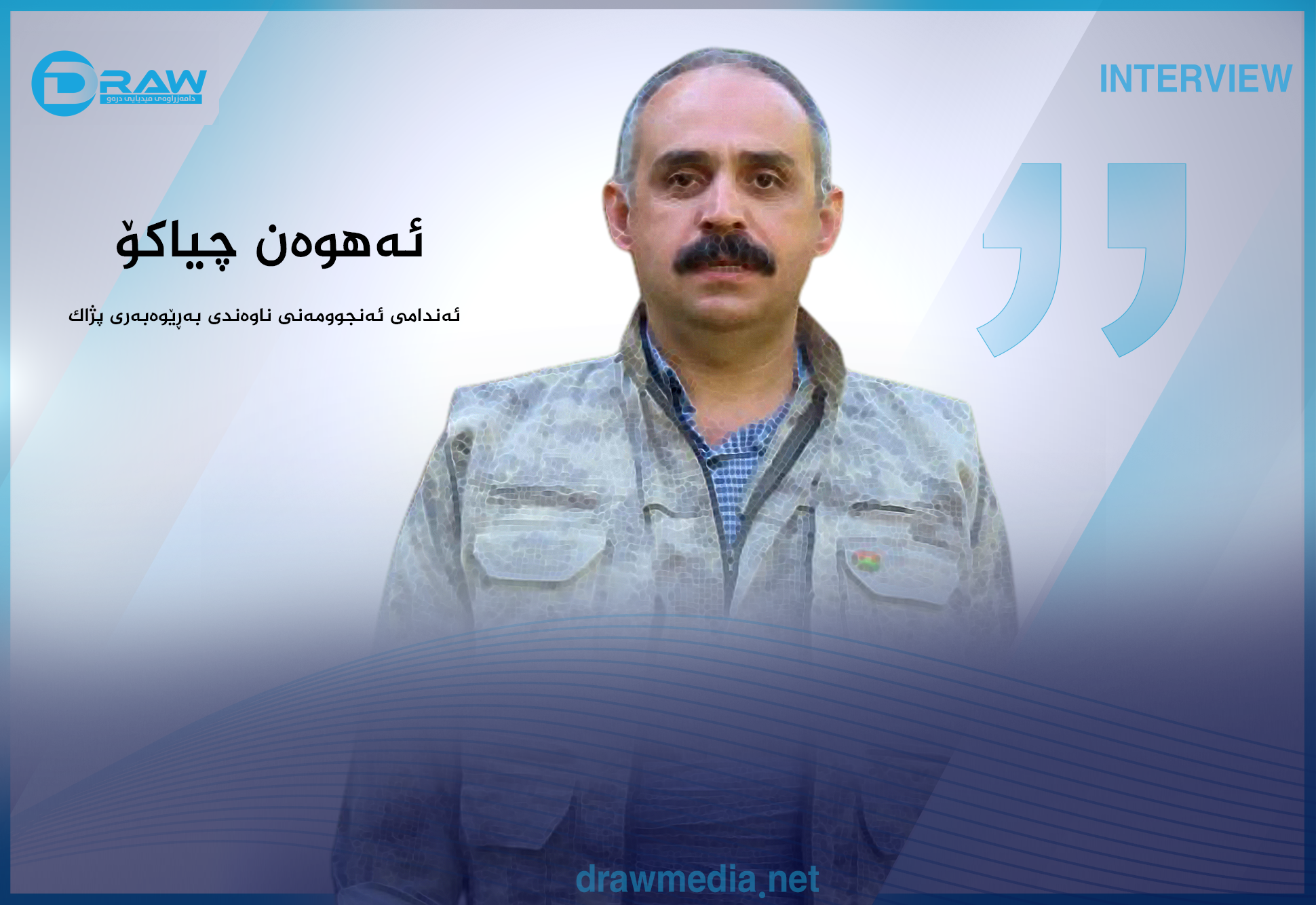
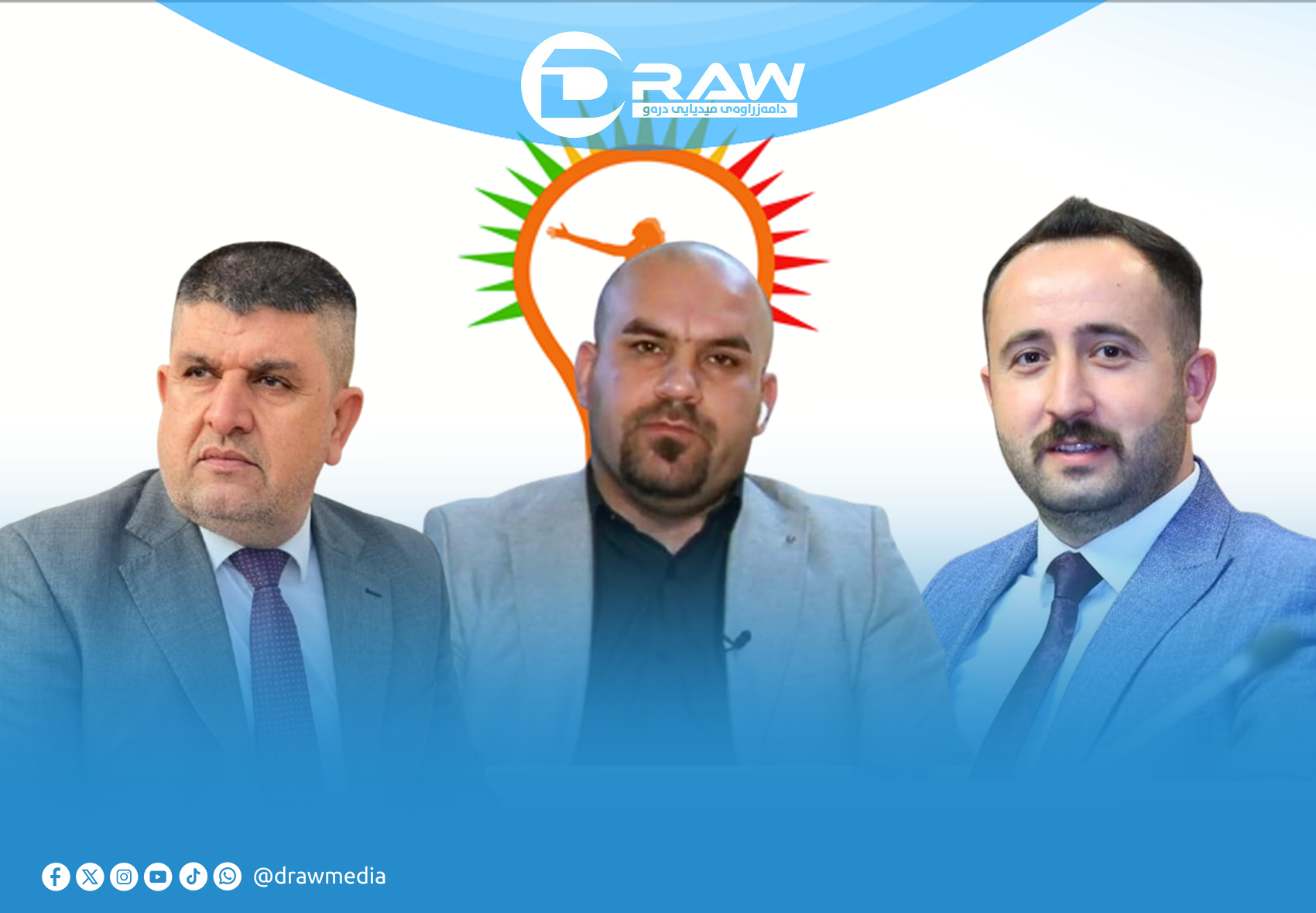
Ahewan Chyako, a member of the Central Council of the Kurdistan Free Life Party (PJAK), says Iran is facing a deepening internal, regional and international crisis that could lead to major changes in the country’s political system. In an extensive interview, he discusses the future of the Islamic Republic, Kurdish political unity in eastern Kurdistan, PJAK’s relationship with Abdullah Öcalan and the PKK, its approach to armed struggle, and the impact of regional developments on the Kurdish movement.
Iran’s Political Crisis
Chyako argues that the Islamic Republic has limited capacity for positive political reform because of what he describes as its ideological and political rigidity. He says any internal change is more likely to make the regime more repressive rather than more democratic.
He also points to divisions within Iran’s ruling establishment, including disagreements between the Islamic Revolutionary Guard Corps, conservative ideological factions, economic elites, and reformist and liberal elements over how the country should respond to its crises. According to Chyako, the gap between the Iranian government and society has continued to widen, while economic difficulties and dissatisfaction are increasing.
He believes that if the regime continues to resist positive change under increasing internal and external pressure, it could eventually face collapse. At the same time, he stresses that the future of Iran cannot be predicted with certainty and that several possible scenarios must be considered.
Rejection of the Islamic Republic’s Current System
Chyako says PJAK does not oppose the collapse of the Islamic Republic and argues that the Velayat-e Faqih system is a central pillar of the regime. In his view, removing that pillar would make it difficult for the current political system to survive.
However, he says PJAK’s preferred outcome is not simply regime change but the establishment of a democratic and pluralistic system that guarantees political, cultural, social and national rights to Iran’s different communities. PJAK, he says, supports forces advocating such a system and rejects authoritarian alternatives.
Kurdish Unity and Political Opportunities
Regarding eastern Kurdistan, Chyako says the crisis in Iran presents both opportunities and risks for the Kurdish movement. He argues that Kurdish parties need greater unity to take advantage of political openings while protecting the Kurdish population from potential threats.
He acknowledges criticism that the alliance of eastern Kurdish parties has been insufficiently active. He says PJAK is seeking to strengthen the alliance and present new initiatives to its members, while recognizing that progress ultimately depends on agreement among the participating parties.
Chyako rejects the idea that the alliance was created primarily through U.S. or Israeli pressure. Instead, he describes Kurdish unity as a political and national necessity arising from Kurdish society itself.
PJAK, Öcalan and the PKK
A major theme of the interview is PJAK’s relationship with Abdullah Öcalan and the wider movement associated with him.
Chyako describes Öcalan as an ideological and philosophical leader for PJAK, while emphasizing that PJAK’s leadership retains responsibility for operational and tactical decisions. He says PJAK evaluates conditions in Iran and eastern Kurdistan independently when determining its practical course of action.
He also says PJAK’s relationship with the wider Öcalan movement is based on national, ideological and philosophical ties rather than being merely a temporary political relationship.
Armed Struggle and Self-Defense
Chyako rejects the characterization of PJAK as solely a military organization. He says the group has historically emphasized political, cultural, social and civil activity and intends to expand those areas.
At the same time, he argues that abandoning the right to self-defense is not an option. PJAK, in his account, considers classical armed warfare an outdated political and strategic model but maintains that defensive capabilities remain necessary under current conditions.
He therefore presents PJAK’s current approach as a combination of civil and political mobilization with what it describes as legitimate self-defense.
Relations Between Iran, Turkey and Israel
Chyako argues that Iran and Turkey continue to share common interests regarding the Kurdish issue despite their wider geopolitical differences. He says changes in Turkey’s approach toward the Kurdish issue could eventually alter Iran’s strategic environment.
He also distinguishes between Turkey’s ability to intervene in western Kurdistan and its ability to intervene in eastern Kurdistan. According to him, geography, demographics and the nature of the Iran-Turkey border make direct Turkish military intervention in eastern Kurdistan considerably more difficult.
PJAK’s Position on the Iran War
Chyako says PJAK deliberately avoided becoming directly involved in the U.S.-Israeli war against Iran. He argues that Iran, despite suffering major military losses, retained significant military and repressive capabilities.
He says PJAK feared that Kurdish forces entering the conflict without sufficient guarantees from the U.S. and Israel could expose Kurdish areas to severe retaliation and mass casualties. He specifically notes that there was no guarantee comparable to the protection arrangements established in Iraqi Kurdistan after 1991.
According to Chyako, PJAK therefore concluded that direct participation would have been irresponsible without adequate political and security guarantees. He says the organization warned other Kurdish actors against making decisions that could expose the Kurdish population to serious harm.
Future Scenarios for Iran
Chyako does not predict a single definitive outcome for Iran. He says the country could experience renewed conflict, lose control over some regions, undergo major internal political changes, or potentially see the collapse of the Islamic Republic.
He believes Kurdish areas could become one of the regions where the central government loses control, creating both opportunities and risks for the Kurdish movement. He also argues that even if the Islamic Republic collapses, remnants of its forces could retain influence in some areas and potentially obstruct stabilization.
Regarding the ideological future of Iran, Chyako argues that neither extreme Iranian nationalism nor religious fundamentalism should dominate the post-regime political order. Instead, he identifies democracy and pluralism as potential central political narratives.
Conclusion
The interview presents PJAK’s position as centered on political change in Iran, Kurdish unity, democratic pluralism and tactical autonomy. Chyako argues that the Islamic Republic is increasingly vulnerable because of internal divisions, economic problems and growing social dissatisfaction, but he does not assume that regime collapse is inevitable.
For PJAK, the developments in Iran represent both an opportunity and a major security risk. The organization says it seeks to strengthen Kurdish political coordination while avoiding actions that could expose Kurdish communities to large-scale retaliation.
At the same time, Chyako portrays PJAK as maintaining an ideological relationship with Abdullah Öcalan while insisting on its own tactical decision-making. He also emphasizes that PJAK’s future struggle should focus increasingly on political, civil, cultural and social activity, while retaining what it considers a right to self-defense.