The Iraqi Ministry of Finance published its first monthly report for January 2026. According to the report:
Total public revenues (oil and non-oil combined) reached approximately 8 trillion and 537 billion dinars.
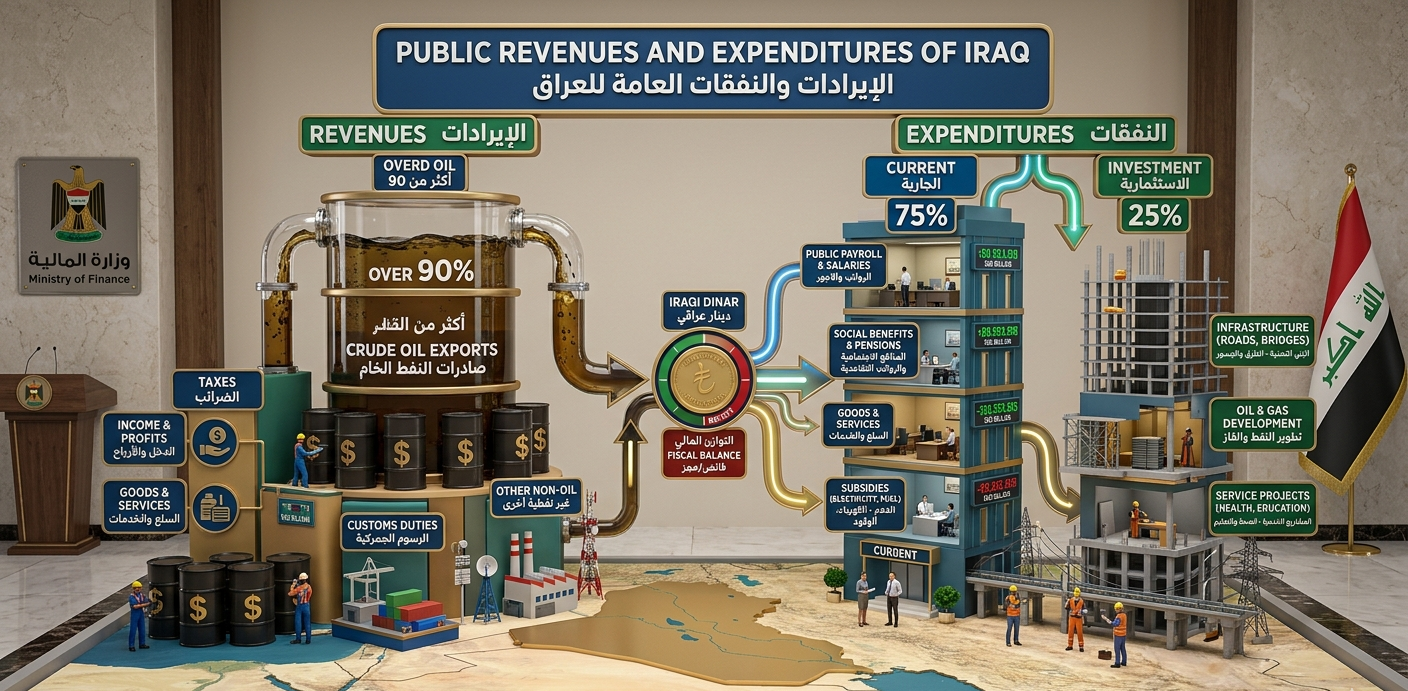
Around 7 trillion and 75 billion dinars (83%) came from oil revenues.
More than 1 trillion and 462 billion dinars (17%) came from non-oil revenues.
Additionally, 120 billion dinars in non-oil revenue was transferred from the Kurdistan Regional Government to Baghdad.
Total expenditures (both operational and investment) exceeded 8 trillion and 876 billion dinars.
94% was allocated to operational spending.
6% went to investment spending.
The ministry spent more than 1 trillion and 28 billion dinars on:
Salaries of public employees
Social welfare
Aid and support programs
Other expenses related to the Kurdistan Region
After deducting total expenditures from total revenues:
Spending exceeded revenues by 4%.
A deficit of more than 339 billion and 597 million dinars occurred.
First: Total Public Revenues (January 2026)
According to the latest report of the Iraqi Ministry of Finance, total public revenues for January 2026 (oil and non-oil combined) amounted to:
8,537,096,769,517 dinars
Oil revenues:
7,075,094,766,090 dinars (83%)
Non-oil revenues:
1,462,002,003,247 dinars (17%)
Of this, 120 billion dinars came from the Kurdistan Region and was transferred to Baghdad.
Second: Total Public Expenditures (Operational & Investment)
According to the same report, total expenditures for January 2026 amounted to:
8,876,694,129,920 dinars
Operational expenditures:
8,345,781,900,593 dinars (94%)
Investment expenditures:
530,912,229,327 dinars (6%)
The ministry also spent:
1,028,285,545,692 dinars
on salaries, social protection, aid, and other expenditures related to the Kurdistan Region.
Third: Comparison Between Revenues and Expenditures
Total expenditures:
8,876,694,129,920 dinars
Total revenues:
8,537,096,769,517 dinars
Result:
Expenditures exceeded revenues by:
339,597,360,403 dinars
This represents a 4% budget deficit relative to total revenues.
The January 2026 financial report shows that Iraq continues to rely heavily on oil revenues, while high operational spending dominates expenditures, resulting in a moderate fiscal deficit.