US pressure on Iraq is escalating as government formation stalls, with informed sources saying Washington is preparing the ground for tougher demands that could test the next leadership early, particularly regarding armed militias.
Sources told Asharq Al-Awsat that offering financial rewards to some faction leaders in exchange for information on senior figures is not merely a routine intelligence step, but a prelude to a later phase that may include demands for the new government to arrest those leaders, tied to continued security cooperation with the United States.
These demands reportedly include Ahmed al-Hamidawi, head of Kataib Hezbollah, and Abu Alaa al-Walai, leader of Kataib Sayyid al-Shuhada. They are seen as highly sensitive targets due to their positions within Iraq’s political and military structure.
Observers say this shift reflects a change in US strategy—from containment to imposing new rules of engagement with Baghdad—especially amid rising regional tensions linked to the rivalry between United States and Iran, often playing out in Iraq through armed factions.
A senior security official noted that the US canceled a technical coalition meeting scheduled in Baghdad and suspended non-routine communication with the current government, awaiting clarity on the next cabinet.
Earlier US reports suggested Washington may have blocked a $500 million transfer of Iraqi oil revenues to Baghdad due to stalled efforts to dismantle Iran-aligned militias.
Sources say the US does not back a specific prime minister candidate but links broader political and security engagement to “serious and tangible” steps to curb militia influence.
These signals coincide with a deepening internal crisis, as Shiite political forces have exceeded constitutional deadlines without forming a government, raising scenarios such as exceptional arrangements or extending the caretaker government—an option opposed by rivals of Mohammed Shia al-Sudani.
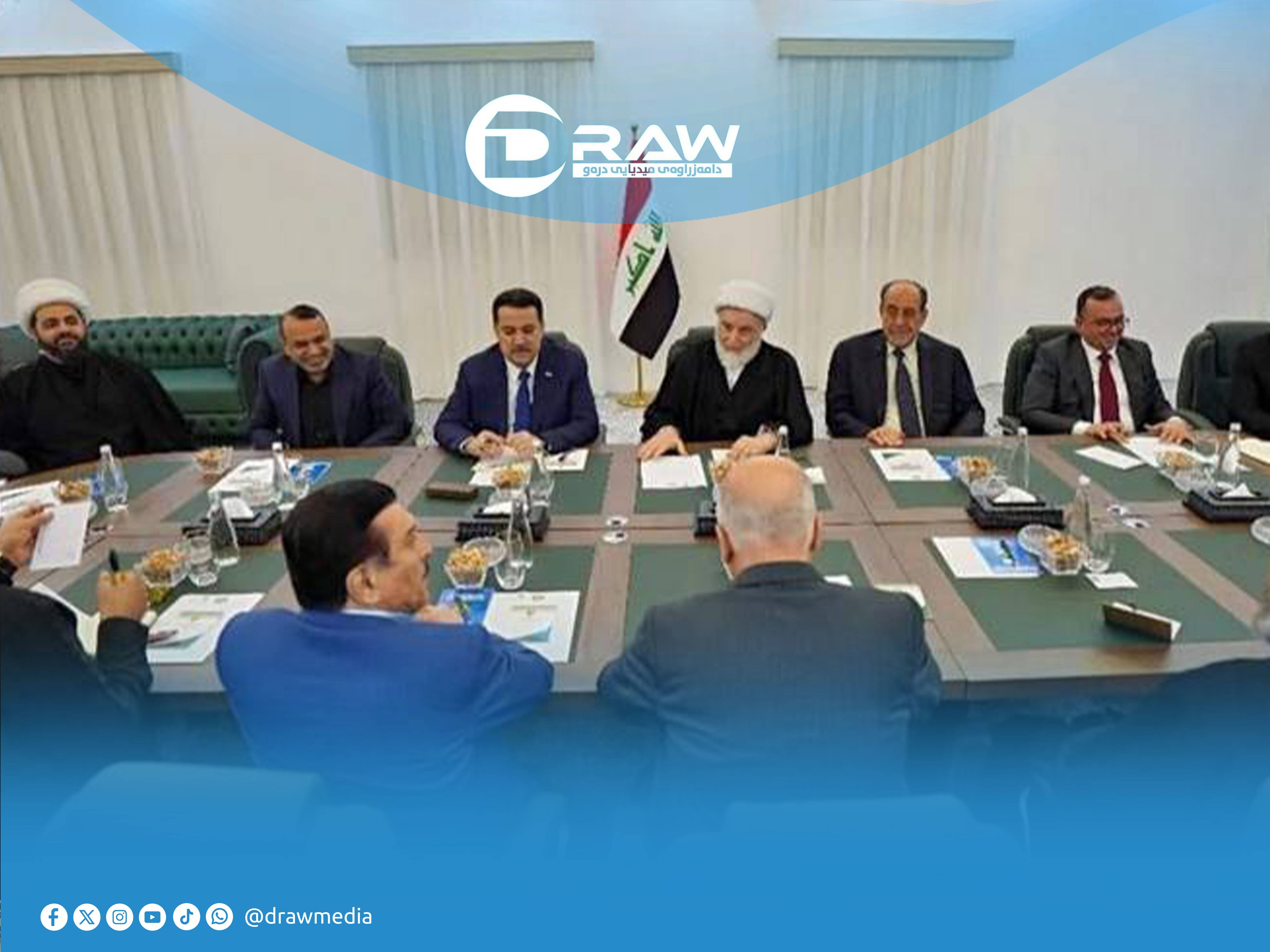
Recent meetings of the Coordination Framework saw clear tensions, especially between Nouri al-Maliki and Mohammed Shia al-Sudani, with failure to agree on a prime minister candidate. Disputes now extend beyond names to the selection mechanism and the nature of the next government.
Names discussed include Haider al-Abadi, Adnan al-Zurfi, and Mohammed Sahib al-Darraji, alongside potential compromise candidates acceptable domestically and internationally.
Analysts believe US pressure may indirectly shape the selection process, pushing some factions toward a figure capable of handling these demands without provoking internal conflict with powerful militias.
Meanwhile, factions within the Coordination Framework warn that fully complying with US conditions could fracture the ruling alliance or ignite internal tensions, especially if actions target leaders tied to major political forces.
As the deadlock continues, the next Iraqi government faces a complex equation: balancing mounting international pressure while preserving internal cohesion in a volatile regional environment where Iraq remains a crossroads of competing interests.