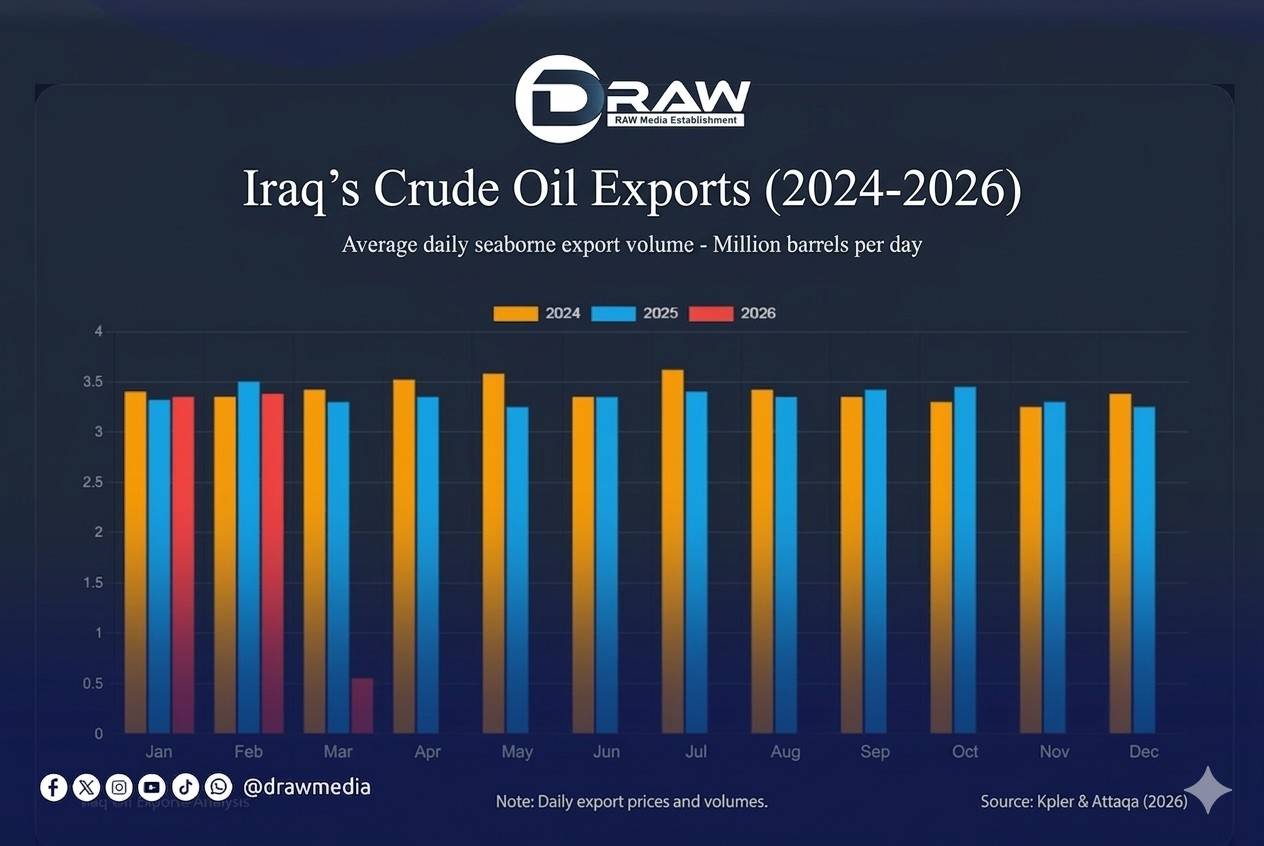
Iraq’s seaborne crude oil exports saw a dramatic decline in March, dropping by 83%, equivalent to a loss of 77.6 million barrels. This collapse was caused by the complete disruption of maritime traffic in the Strait of Hormuz, due to the Iran–US–Israel conflict.
Data shows that during the first month of the war, Iraq’s oil exports dropped to 562,000 barrels per day (17.4 million total), compared to 3.36 million barrels per day (94.02 million total) in February before the conflict.
Geopolitical tensions and the closure of the Strait of Hormuz blocked Iraq’s access to global markets. This forced Iraq to take measures such as halting production at the Rumaila oil field (the country’s largest) and reducing output at southern fields like West Qurna.
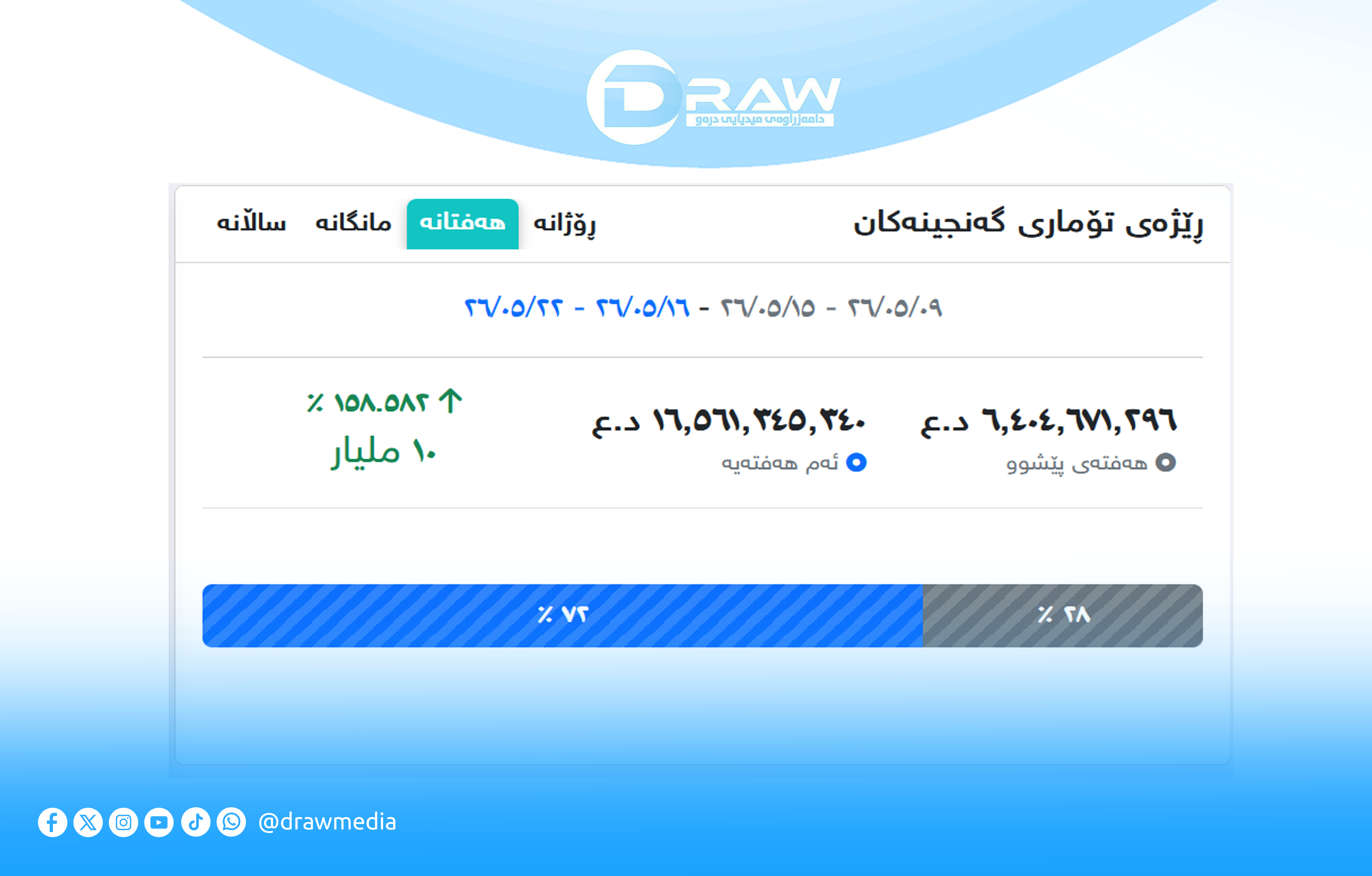
This collapse caused a 72% decline in financial revenues, with only $1.9 billion recorded in March compared to $6.8 billion in February, according to statements by Ali Shatari, Director General of Iraq’s State Organization for Marketing of Oil (SOMO), in a recent interview with Asharq Bloomberg.
Countries importing Iraqi oil in March 2026
The data highlights how the closure of the Strait of Hormuz created a major gap in exports to key buyers:
China: 219,000 barrels/day
India: 69,000 barrels/day
Italy: 32,000 barrels/day
Malaysia: 32,000 barrels/day
Unspecified destinations: 209,000 barrels/day
Exports to China dropped by 81%, falling to 219,400 barrels/day in March, compared to 1.14 million barrels/day in February. On an annual basis, China lost about 83.2% of its share compared to March 2025.
Exports to India saw the largest monthly decline, dropping from 980,000 barrels/day in February to just 69,000 barrels/day in March — a 92.2% annual decrease.
Italy’s imports fell to 32,000 barrels/day, down from 71,000 barrels/day in February, meaning it received only about one-third of its usual supply.
Due to maritime disruptions, South Korea and the United States imported zero Iraqi oil in March, compared to 256,000 and 176,000 barrels/day respectively in February.
Oil exports in the first quarter of 2026
Average Iraqi seaborne oil exports in the first quarter of 2026 declined by 28% year-on-year, reaching 940,000 barrels per day, mainly due to the sharp drop in March.
Despite relative stability in January and February, the March shock dragged quarterly averages to their lowest level in years.
Alternative export routes
To bypass maritime restrictions, Iraq has begun exporting crude oil overland through Syria. A convoy of 299 tanker trucks departed from the Baiji region toward the Al-Waleed–Al-Tanf border crossing, heading to the Baniyas port on the Mediterranean for global shipment.
Estimates suggest Iraq aims to export about 650,000 barrels per month via this Syrian route by June. This is part of a broader plan to export via tanker trucks to neighboring countries (Turkey, Syria, and Jordan) as a temporary solution to offset losses of up to 1.4 million barrels per day.
At the same time, intensive talks between Baghdad and Damascus are underway to rehabilitate the Kirkuk–Baniyas pipeline, which has been inactive for decades, to create more flexibility in exports and ensure Iraqi oil reaches European markets without relying on the Strait of Hormuz.