
هەواڵ
Iran, Owner of the World’s Fourth-Largest Oil Reserves
A general overview of Iran’s oil sector
بڵاوکراوەتەوە لە : 9 ئازار 2026
قەبارەی دەقەکان
قەبارەی دەقەکان
هەواڵ
A general overview of Iran’s oil sector
بڵاوکراوەتەوە لە : 9 ئازار 2026
قەبارەی دەقەکان
قەبارەی دەقەکان
Key Facts
Key export infrastructure such as Kharg Island was also shut down. As a result, Iran’s crude oil exports dropped from around 1.7 million barrels per day to less than 100,000 barrels per day. Refineries and oil storage facilities near Tehran, Bushehr, and Fars were also targeted, further weakening Iran’s refining capacity. Attacks on electricity infrastructure increased pressure on Iran’s industrial sector.
In response, Iran threatened to close the Strait of Hormuz, where roughly 20% of the world’s oil trade passes through this narrow waterway. Although such a move could sharply increase global energy prices and destabilize markets, it would also damage Iran’s own exports and trade relations with key partners such as China.
Fears of escalation have already pushed global oil prices up by nearly 50%. Members of OPEC are discussing increasing production to stabilize the market. The conflict has not only disrupted Iran’s energy output but also created a systemic risk to Gulf shipping routes and heightened regional instability.
Overview of Iran’s Oil Sector
Iran holds 9% of global proven oil reserves, making it the fourth largest in the world. It also possesses 17% of global natural gas reserves, the second-largest share globally after Russia.
Iran accounts for 19% of the Middle East’s proven oil reserves and ranks as OPEC’s third-largest crude producer. Before sanctions were imposed, it was also among the largest exporters of crude oil. At the same time, Iran is the largest energy consumer in the Middle East.
Oil revenues typically make up over 25% of the government budget, while oil contributes roughly 9% of the national GDP.
Before sanctions in 2012, Europe was the second-largest importer of Iranian oil after Asia. By 2023–2024, more than half of Iran’s non-oil exports consisted of petrochemical products and gas condensates.
Iran also spends the largest amount globally on energy subsidies.
Geographic Distribution of Iran’s Oil and Gas
Most oil and gas infrastructure is concentrated in southwestern Iran:
Oil fields: Khuzestan Province
Gas fields: Bushehr Province
Condensates: Produced mainly in the South Pars field
Iran exports about 90% of its crude oil through Kharg Island, which then passes through the Strait of Hormuz. Any attack on Kharg Island or closure of the strait could halt most Iranian oil exports.
The South Pars offshore gas field is part of the largest natural gas field in the world, shared between Iran and Qatar.
The total field area is about 9,700 km², of which:
3,700 km² belong to Iran
6,000 km² belong to Qatar (where it is called the North Field)
The field contains about 1,800 trillion cubic feet of gas, enough to meet global demand for about 13 years. Daily production is around 700 million cubic meters, representing roughly 7–10% of global gas production.
Major Oil Fields and Refineries
Some of Iran’s most important energy facilities include:
Ahvaz Oil Field
One of the largest fields in the world
Produces about 750,000 barrels per day
Gachsaran Field
Second-largest oil field in Iran
Produces about 500,000 barrels per day
Marun Field
Located in Khuzestan
Produces about 500,000 barrels per day
Estimated reserves: 46 billion barrels
Aghajari Field
Fifth-largest field in Iran
Produces about 200,000 barrels per day
Estimated reserves: 28 billion barrels
Abadan Refinery
Processes around 500,000 barrels per day
Isfahan Refinery
Processes about 375,000 barrels per day
Tehran Refinery
Processes about 250,000 barrels per day
Iran in OPEC
Iran was a founding member of OPEC and once had significant influence in the organization. At its production peak in 1974, Iran produced more than 6 million barrels per day, second only to Saudi Arabia.
However, several factors reduced its production capacity:
The Iran–Iraq War (1980–1988)
Long-term economic sanctions
Limited foreign investment
Sanctions and the Nuclear Deal
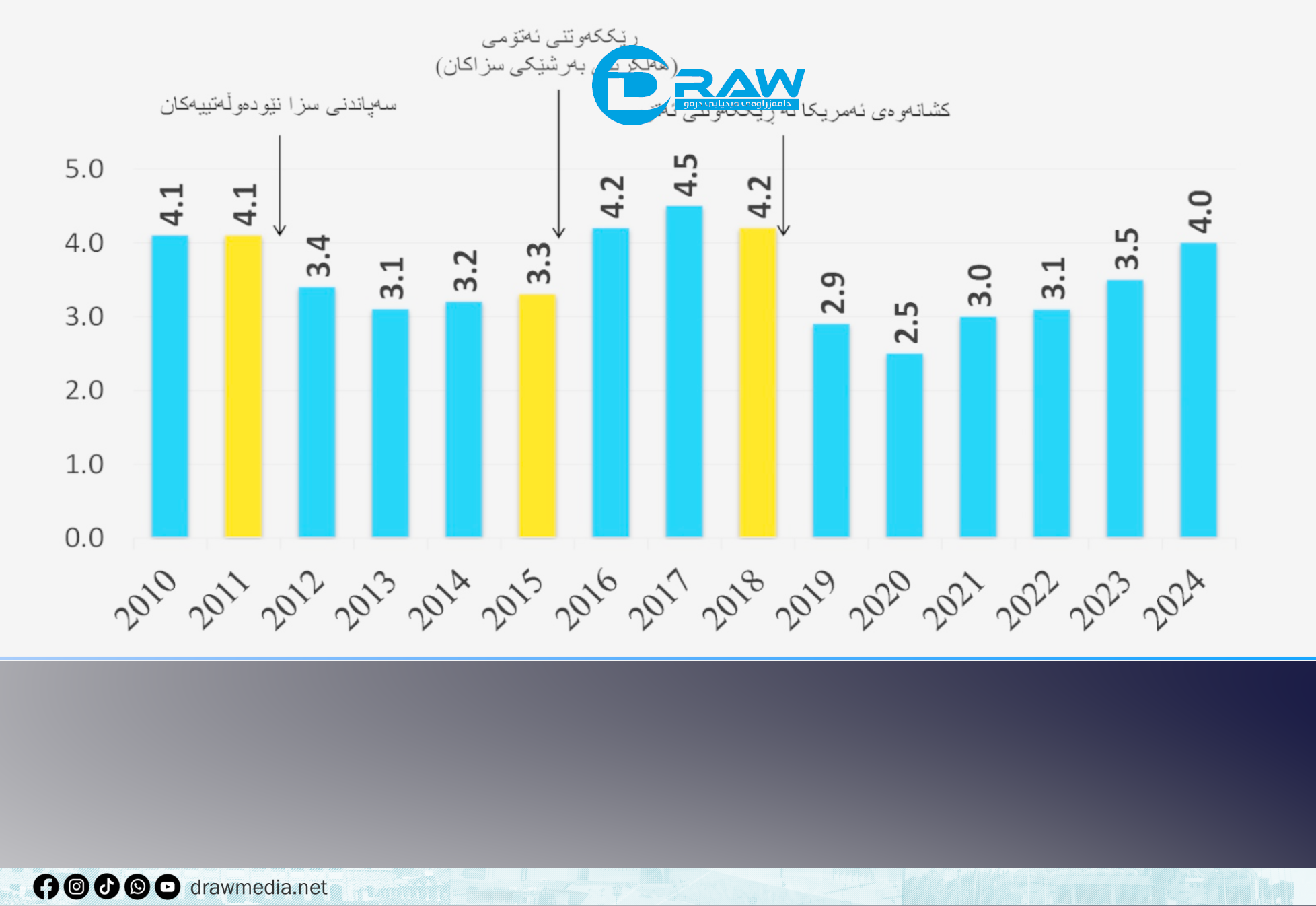
After sanctions were imposed by the United States and the European Union in 2011–2012, Iran’s oil exports were cut in half by 2015.
Following the 2015 nuclear deal (JCPOA), production quickly rebounded. Within two years, Iran increased output by 1.3 million barrels per day, and exports rose by more than 1 million barrels per day.
However, when the United States withdrew from the deal in 2018 under President Donald Trump, sanctions were reimposed. Oil production fell sharply again, reaching its lowest level since 1989 by late 2020.
Between 2021 and 2024, Iran gradually rebuilt production. By 2024, output reached 4 million barrels per day, the highest annual level since sanctions were reintroduced.
China’s Role in Iran’s Oil Exports
China has played a major role in helping Iran bypass sanctions. Iranian oil exports increased from about 400,000 barrels per day during the peak of the “maximum pressure” campaign to roughly 1.5 million barrels per day in 2024.
Approximately 91% of Iran’s oil exports now go to China.
Iran often uses a network known as the “shadow fleet”—tankers that transfer oil between ships at sea—to conceal the origin of shipments. Russia later adopted similar tactics.
Financial transactions are often conducted in Chinese yuan through smaller Chinese banks, making it harder for Western authorities to track or enforce sanctions.
When Iranian oil reaches China, it is sometimes rebranded as Malaysian or Middle Eastern crude before being sold to independent Chinese refineries.
Oil Revenue
According to the U.S. Energy Information Administration (EIA):
Iran earned about $43 billion from oil exports in 2024.
Oil accounted for 57% of Iran’s total export revenues that year.
However, Iran often sells oil at heavy discounts, raising questions about the true value of its revenues.
According to the International Monetary Fund (IMF), Iran would need an oil price of $163 per barrel to balance its 2025 national budget, the highest break-even price among Middle Eastern oil exporters.
Structural Challenges in Iran’s Oil Industry
Despite recent production increases, Iran’s oil output remains far below levels seen in the 1970s.
Major obstacles include:
Limited foreign investment
Lack of advanced technology
International sanctions
Aging oil fields
Following the 1979 Islamic Revolution, Iran restricted foreign investment in its oil sector. Later it introduced “buyback contracts”, allowing foreign companies to invest in early development phases before transferring operations to the National Iranian Oil Company.
However, these terms were often unattractive to international investors.
As a result, Iran increasingly relies on domestic companies, which often lack sufficient capital and technical expertise.
Meanwhile, other OPEC members such as Iraq and the UAE have expanded their market share, often at Iran’s expense.
Strategic Importance of the Strait of Hormuz
One of Iran’s most powerful geopolitical assets remains the Strait of Hormuz. Any disruption in this narrow maritime corridor could have major global consequences for energy supply and prices, particularly for large importers like China.
Iranian officials frequently threaten to close the strait during periods of tension, though such a move would also severely harm Iran’s own exports.