Draw Media
Analytical Report
By: Dana Naqi
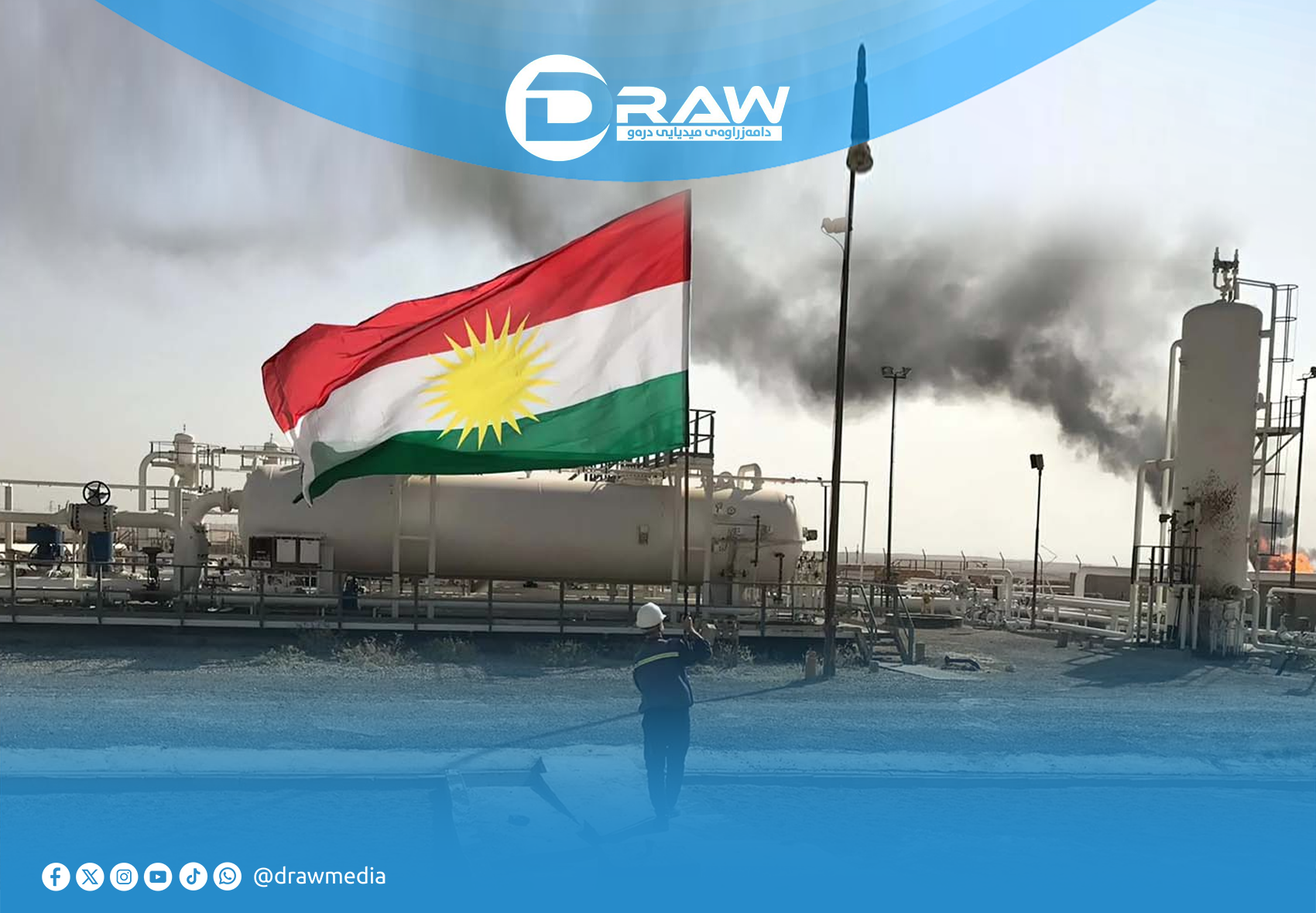
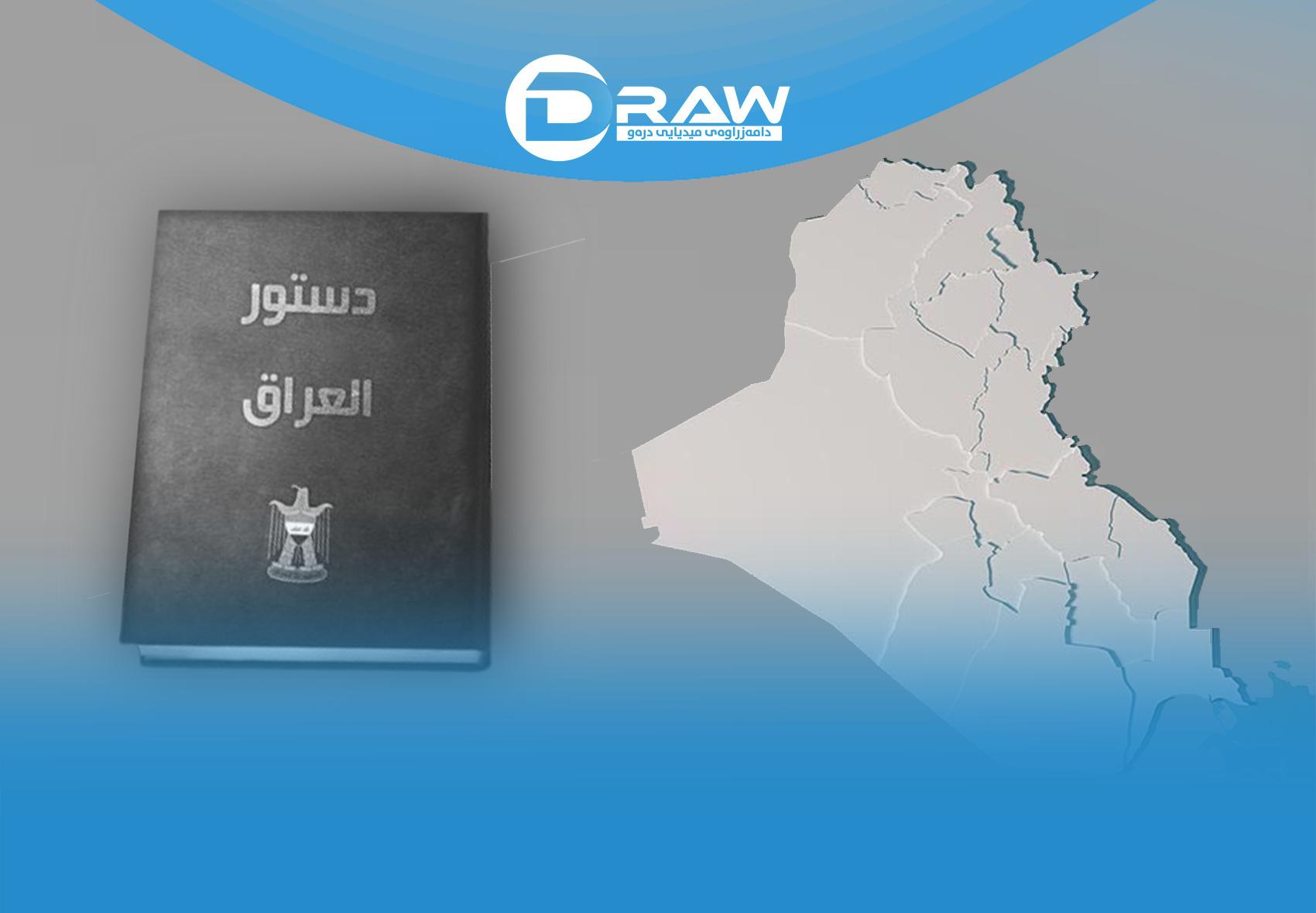
The passage of the Kurdistan Region Oil and Gas Law in 2007 (Law No. 22 of 2007) marked a historic and legal turning point. Relying on the provisions of the Iraqi Constitution (specifically Articles 112 and 115), the Kurdistan Regional Government (KRG) moved ahead of the federal government, whereas Baghdad has still failed to pass a federal oil and gas law and continues to operate under outdated legislation from the former regime. This step attracted dozens of major international oil companies and led to the construction of an independent production and export infrastructure—despite political hurdles, administrative shortcomings, and the suspension of oil exports through the Ceyhan pipeline in March 2023.
Prior to the export halt, the Kurdistan Region’s daily production capacity had reached approximately 450,000 barrels per day (bpd). Following the pipeline closure, output dropped to roughly 250,000 to 300,000 bpd, most of which is allocated to domestic consumption and local refineries. The Region’s proven oil reserves are estimated at around 45 billion barrels.
Map of Oil Fields from Kifri to Zakho (Data, History, and Operators)
Geographically and geologically, the oil fields of the Kurdistan Region are divided across two main zones, each with distinct geological formations, drilling histories, and crude grades:
Tawke and Peshkabir Fields: Located in the Zakho area (Duhok Governorate). Discovered in 2005 and developed in 2007 by DNO (Norwegian) and Genel Energy (Turkish). Previous production capacity stood at 100,000 to 110,000 bpd of medium-to-light crude, serving as the backbone of the Region's exports.
Shaikan Field: Located in the Shaikan district of Duhok Governorate. Discovered in 2009 and developed in 2013 by Gulf Keystone Petroleum (British). Previous production capacity was 45,000 to 55,000 bpd; it produces heavy, sour (high-sulfur) crude and holds massive reserves.
Atrush Field: Located in the Atrush area of Duhok Governorate. Discovered in 2011 and developed in 2017 by Shamaran Petroleum (Canadian) and TAQA (Emirati). Previous production capacity ranged from 35,000 to 45,000 bpd of heavy crude, requiring advanced extraction technology.
Sarsang Field: Located in the Amedi and Bamarni areas of Duhok Governorate. Discovered in 2011 and developed in 2014 by HKN Energy (American). Previous production capacity was 35,000 to 40,000 bpd of high-quality light crude.
Khurmala Dome: Located southwest of Erbil. Modern development began in 2008 by KAR Group (local). Previous production capacity reached 130,000 to 150,000 bpd, making it the largest producing field in the Region with medium-grade crude.
Taq Taq Field: Located in the Koya area (Erbil Governorate). Discovered in 1978 and developed from 2006 by Genel Energy and Addax Petroleum (Sino-Swiss). Production previously peaked at 140,000 bpd, though it has since fallen below 5,000 bpd due to water breakthrough. It yields very light crude.
Bina Bawi and Miran Fields: Located between Erbil and Sulaymaniyah. Discovered between 2007 and 2010 and managed by Genel Energy. Both remain in the development stage and are far richer in natural gas than crude oil.
Khor Mor Field: Located in the Chamchamal district of Sulaymaniyah Governorate. Discovered in 1928 and developed since 2008 by Dana Gas and Crescent Petroleum (Emirati). Output reaches 15,000 bpd of condensate alongside 500 million standard cubic feet per day (MMscfd) of natural gas, serving as the Region’s primary gas source for electricity generation.
Chamchamal Field: Located in the Chamchamal district of Sulaymaniyah Governorate. Discovered in 1930 and held by Dana Gas and Crescent Petroleum since 2008. Still under development, it holds substantial natural gas reserves.
Sarqala Field (Garmian): Located in the Kifri and Kalar areas of the Garmian Administration. Discovered in 2011 and developed in 2015 by Gazprom Neft (Russian) and WesternZagros (Canadian). Previous production capacity was 30,000 to 35,000 bpd of high-quality, light, sweet (sulfur-free) crude.
Kurdamir and Topkhana Fields: Located across Garmian and Chamchamal. Discovered and explored between 2009 and 2012 by WesternZagros and Repsol (Spanish). Neither has entered commercial production yet; both contain deep reservoirs of mixed oil and natural gas.
Chia Surkh Field: Located in the Kifri and Khanaqin area of Garmian. Discovered in 1902 and redeveloped from 2009 by Genel Energy and Petoil. Production is limited to a few thousand barrels per day, and it stands as the oldest oil field in the history of Iraq and the wider region.
Oil Development Disparities Between the Yellow and Green Zones: Causes and Data
Statistics clearly indicate that over 80% to 85% of the Kurdistan Region’s total oil production is concentrated within Erbil and Duhok governorates (the Yellow Zone), whereas Sulaymaniyah, Halabja, and the Garmian Administration (the Green Zone) account for only about 15% to 20%. This wide gap stems from several scientific, geological, and administrative factors:
Geological Composition (Oil vs. Gas): Geologically, the subsurface of Erbil and Duhok (particularly the northern Zagros fold belt) is rich in oil traps located at shallower depths (1,500 to 3,000 meters), making drilling significantly cheaper. Conversely, the geological structure of Sulaymaniyah and Garmian is predominantly gas-prone, and the oil present lies at extreme depths (over 4,000 to 5,000 meters) under intense pressure and high temperatures (such as Kurdamir and Topkhana). Drilling a single well in these formations costs upwards of $50 million to $80 million and carries high technical risks.
Proximity to Export Infrastructure: The Kurdistan Region’s main export pipeline to Turkey passes directly through Khurmala (Erbil) and Peshkabir (Duhok). This enabled operators in those areas to tie their fields rapidly into the pipeline network, whereas transporting crude from Garmian and Sulaymaniyah required trucking or constructing long-distance pipelines.
Decision-Making Stability and Investment Climate: In the Yellow Zone, centralized decision-making and streamlined administrative facilitation accelerated operations for foreign firms. In contrast, internal political rivalries, fragmented authority, and contractual ambiguities in the Green Zone prompted several major international companies (such as Spain’s Repsol and ExxonMobil) to relinquish their exploration blocks in Sulaymaniyah, Qara Dagh, and Garmian after several years of work.
The Refining Industry: Comparing Erbil and Sulaymaniyah
The refining sector is one of the largest pillars of the Kurdistan Region’s domestic economy, exhibiting a marked contrast in capital scale and processing capacity between the two zones:
1. Refineries in Erbil Governorate
Erbil has become the primary hub of the refining industry in both the Kurdistan Region and Iraq as a whole, driven by massive private-sector capital and proximity to the Khurmala field:
Kalak Refinery (KAR Group): The largest private-sector refinery in Iraq, with a refining capacity reaching roughly 175,000 bpd. Valued in the billions of dollars, it utilizes modern technology to produce gasoline, gasoil (diesel), kerosene, and bitumen.
Lanaz Refinery: One of the newest and most advanced refineries, located along the Erbil–Gwer road, with a capacity of approximately 75,000 to 100,000 bpd. Backed by over $1 billion in capital, it supplies high-octane gasoline to the market.
Medium and Small Refineries: Dozens of smaller refineries operate in the Gwer and Kani Qirzhala areas processing petroleum products, though many have created significant environmental challenges.
2. Refineries in Sulaymaniyah Governorate (Green Zone)
In Sulaymaniyah, the refining sector is smaller in scale and relies primarily on medium-sized facilities:
Bazian Refinery (Qaiwan Group): The largest and most vital refinery in the Green Zone, with a capacity of roughly 34,000 to 40,000 bpd. Representing hundreds of millions of dollars in investment, it plays a central role in supplying fuel (gasoline and gasoil) as well as heavy fuel oil (black oil) for Sulaymaniyah’s cement plants and power stations.
Small Refineries in Tanjaro and Garmian: Several small- and medium-scale refineries—each with a capacity between 2,000 and 10,000 bpd—focus on refining Sarqala crude or blending petroleum derivatives to meet local demand and export surplus volumes.
The Bitumen (Asphalt) Industry in Sulaymaniyah and the Role of Oil
Sulaymaniyah Governorate (specifically the Bazian, Tanjaro, and Garmian areas) is regarded as the capital of the bitumen and construction materials industry in the Kurdistan Region. This sector maintains a direct, vital link to the oil industry:
Feedstock Supply: Bitumen is the heavy residual byproduct of refining crude oil (particularly heavy and medium grades). The Bazian refinery and surrounding facilities supply the heavy black oil and residue left over after extracting gasoline and diesel as primary feedstock to bitumen plants.
Industry Scale: More than 15 large- and medium-scale bitumen manufacturing plants operate within Sulaymaniyah’s borders. These facilities not only supply road and infrastructure projects across the Kurdistan Region and central and southern Iraq, but also export substantial volumes of Sulaymaniyah-produced bitumen abroad (notably to Iran, Turkey, and Gulf states).
Economic Significance: This industry has enabled Sulaymaniyah to complete the petroleum value chain. Rather than merely selling raw crude, refining it and converting the heavy residues into bitumen generates substantial value-added economic returns for the area and sustains thousands of direct and indirect jobs.
Future Outlook for the Kurdistan Region’s Oil and Natural Resources
Reading the data, geopolitical shifts, and the Region’s geological makeup points to three primary trajectories for the future of these natural resources:
1. Shifting Gravity from Crude Oil to Natural Gas:
The true energy future of the Kurdistan Region lies in natural gas rather than oil. Several mature oil fields (such as Taq Taq) have entered natural decline, whereas the Region’s natural gas reserves are estimated at over 5.6 trillion cubic meters, the vast majority of which is located in Sulaymaniyah and Garmian (Khor Mor, Chamchamal, Miran, and Bina Bawi). Over the coming decade, the Green Zone is positioned to become the primary energy hub of the Region on the strength of its gas reserves.
2. Transitioning from Raw Exports to Domestic Industrialization:
The suspension of the Ceyhan pipeline and shifting legal dynamics with Baghdad demonstrated the vulnerability of relying exclusively on raw crude exports. Consequently, the future of the Region’s oil sector is moving toward domestic refining and petrochemical industries. Selling refined derivatives (gasoline, diesel, bitumen, and plastics) yields substantially higher profit margins and creates local employment, provided strict environmental and quality standards are enforced.
3. Relations with Baghdad as a Precondition for Growth:
Without reaching a comprehensive constitutional and legal agreement with the federal government regarding production costs (which are higher in the Region’s mountainous terrain compared to Basra) and contractual frameworks, attracting major international oil companies back to the Region will remain difficult. However, if a durable settlement is achieved, the Kurdistan Region could raise its oil production capacity back above 500,000 bpd by 2030 and emerge as a cornerstone natural gas supplier for Iraq and the broader region.