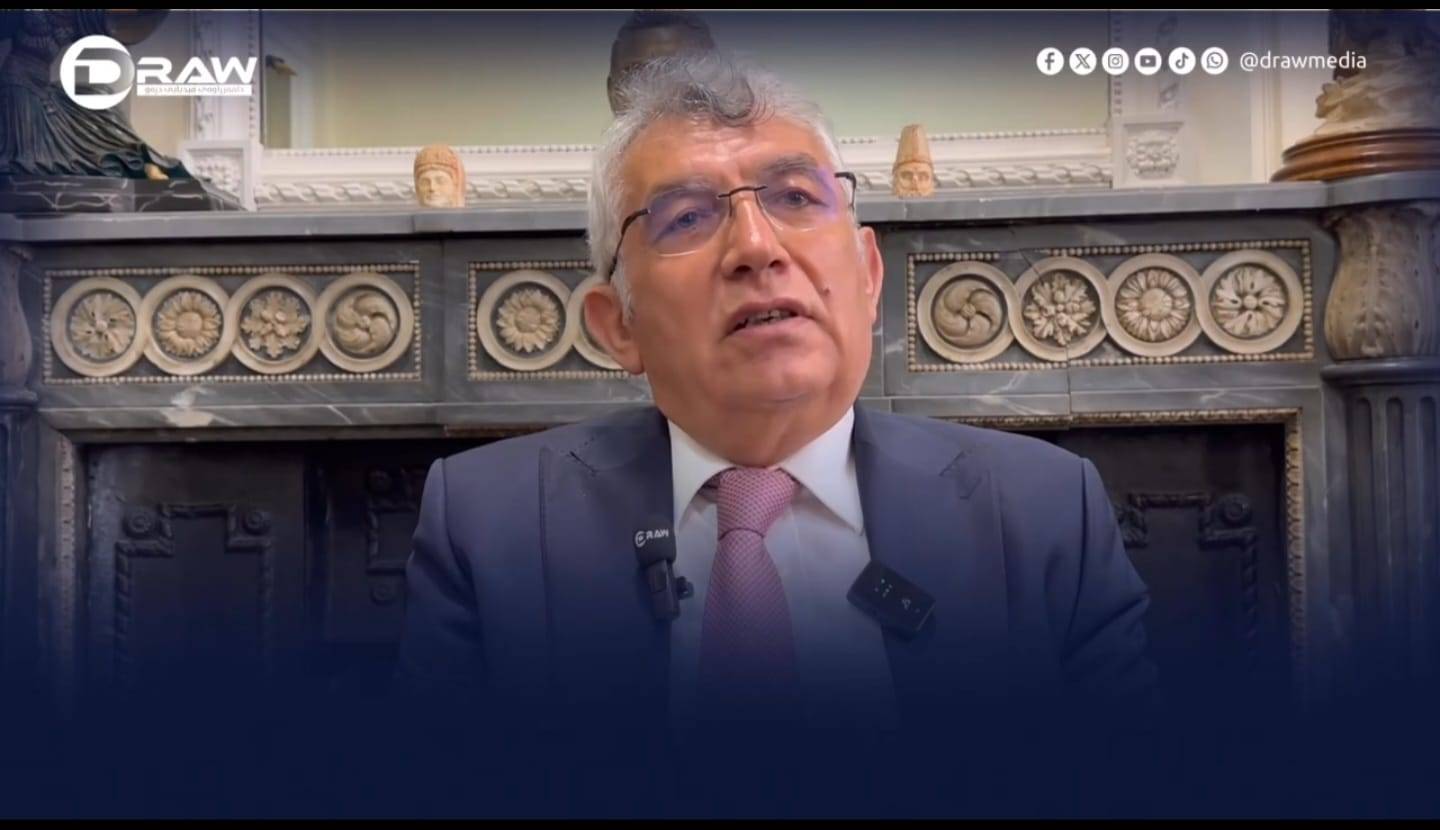
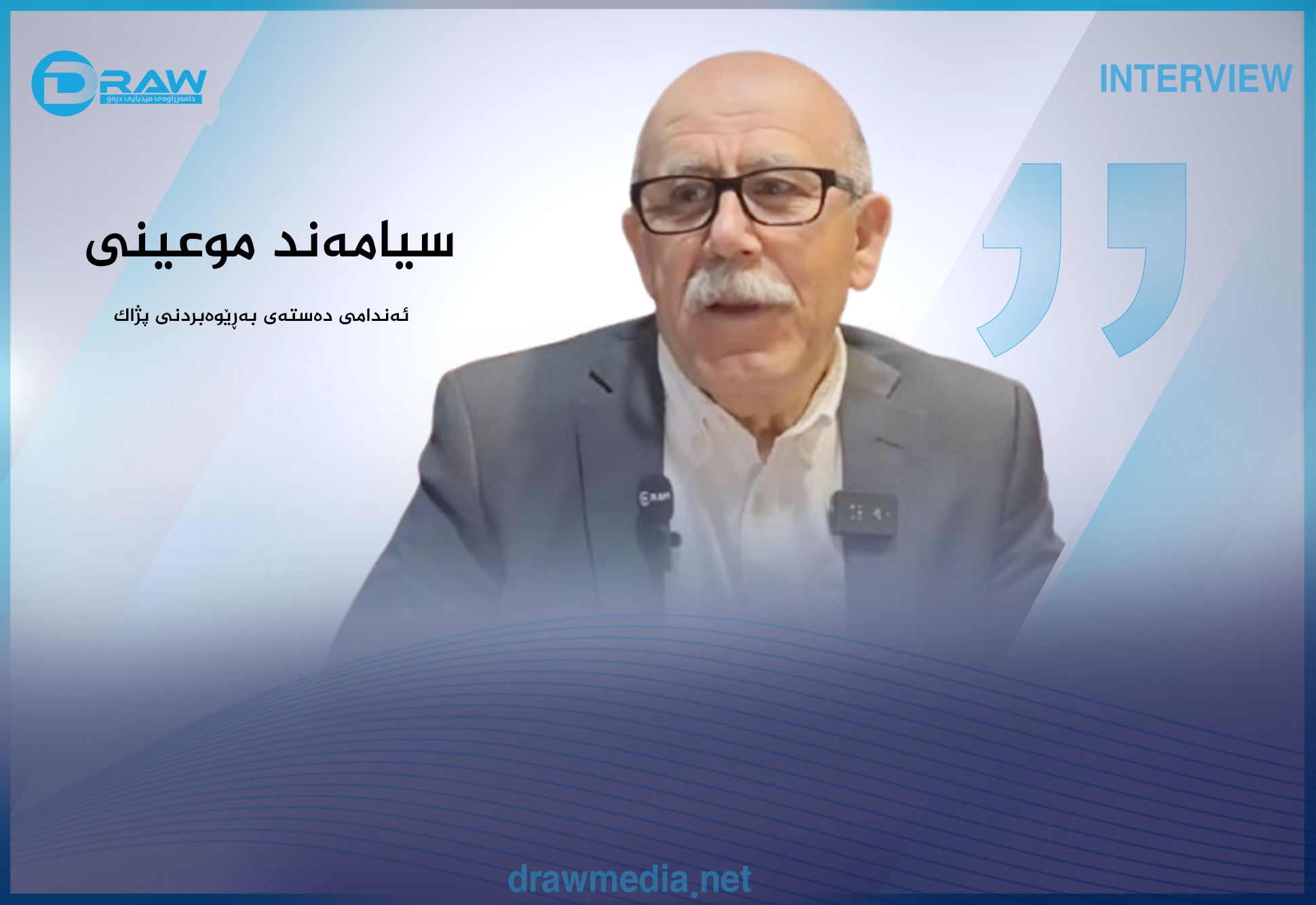
Following the PKK’s announcement of its dissolution and the start of a new phase in the peace process in Turkey, questions about the future of the Kurdish freedom movement and the Turkish state's practical steps remain subjects of debate and uncertainty. In an exclusive interview with Draw Media, Zubeyir Aydar, a member of the Executive Council of the Kurdistan Communities Union (KCK), emphasized that despite some positive signs, no legal guarantees or concrete measures have yet been taken by the Turkish state.
He also spoke about the continuation of the Kurdish freedom movement and its defense forces, arguing that resolving the Kurdish issue in Northern Kurdistan would have a broad impact on all parts of Kurdistan. At the same time, Aydar criticized the delay in forming the institutions of the Kurdistan Region and called for the parliament to convene as soon as possible and a government to be formed.
Without Legal and Constitutional Guarantees, the Kurdish Issue Cannot Be Resolved
For the past 20 months, there has been a process of dialogue and a search for peace in Northern Kurdistan. If it succeeds, it will be of great value and a strategic project for all Kurds.
The process is moving very slowly. So far, no significant steps have been taken by the Turkish state, despite the Kurdish side having already taken many initiatives. We are serious about resolving this issue through peaceful means.
However, there remains skepticism. A peace process cannot be approached like a business transaction based on trust or mistrust alone. Either negotiations succeed or they do not. The reality is that no practical measures have yet been implemented. For more than a year, the conflict has largely stopped. Military operations and arrests of political figures in Northern Kurdistan have declined significantly. A parliamentary commission was established and visited İmralı Prison, where discussions were held with Abdullah Öcalan. Reports have been prepared, but no concrete actions have followed.
The process has now entered what we call the “second phase,” requiring legal and constitutional reforms. A legal framework must be established because a single law alone cannot resolve the issue. This framework should include:
- Clarifying Abdullah Öcalan’s status.
- Opening broader space for democratic politics.
- Releasing political prisoners.
- Removing government-appointed trustees from municipalities.
- Gradually lifting restrictions on Kurdish language and education.
- Recognizing Kurds as a people and nation within the constitution.
Turkish officials now acknowledge the existence of Kurds and their rights, but words alone are insufficient. Unless these rights are secured through law and incorporated into the constitution, nothing is guaranteed.
Before parliament recesses in mid-July, laws related to amnesty, integration, and other necessary reforms should be passed. Our primary goal is for Kurds in Northern Kurdistan to obtain recognized legal and constitutional status, with restrictions on language, culture, and self-organization removed.
The Kurdish freedom struggle against Ottoman and later Turkish rule has lasted more than 220 years. According to Aydar, the first uprising began in 1806 under Abdulrahman Pasha of Baban against the Ottoman Empire.
He argues that the PKK-led movement represents the largest Kurdish uprising in modern history. Turkish military sources themselves have referred to it as the 49th Kurdish uprising, and the most significant one.
Aydar believes that a solution in Northern Kurdistan would have far-reaching consequences throughout Kurdistan. It would strengthen Kurdish gains in western Kurdistan (Rojava), help protect the Kurdistan Region of Iraq, and create opportunities for Kurds in eastern Kurdistan (Iran).
“Freedom in the North means a solution for Kurdistan as a whole,” he said.
He stressed that the Kurdish movement and the Turkish state remain adversaries despite ongoing negotiations.
“Peace is made with an enemy, not with a friend. Thousands of people have died on both sides. Until peace is achieved, that reality remains.”
The Freedom Movement Will Continue
Aydar said that even if the PKK dissolves within the framework of the current process, the broader Kurdish freedom movement will continue.
“A people without organization is merely a number,” he said. “Organization is fundamental. Without it, there is no future.”
He emphasized that Kurdish political, diplomatic, and social efforts will continue internationally and throughout Kurdistan. The movement seeks rights equal to those enjoyed by Arabs, Persians, and Turks—nothing more and nothing less.
According to Aydar, neither side has achieved a decisive victory after four decades of conflict, making a negotiated settlement a rational path forward.
Aydar also addressed political developments in the Kurdistan Region of Iraq.
Twenty months after the regional elections, parliament has still not fully resumed its work and a government has not yet been formed. He described this as a serious problem that weakens Kurdish unity and harms the region politically, both domestically and internationally.
“The achievements of the Kurdistan Region are important for all Kurds and must be protected,” he said.
He called for the Kurdistan Parliament to convene as soon as possible and for a government to be formed without further delay. If political parties remain unable to reach an agreement, he suggested that new elections should be considered.
According to Aydar, stronger democratic cooperation among Kurdish political forces is essential to addressing the many challenges facing the Kurdish people and preserving the gains achieved in the Kurdistan Region.