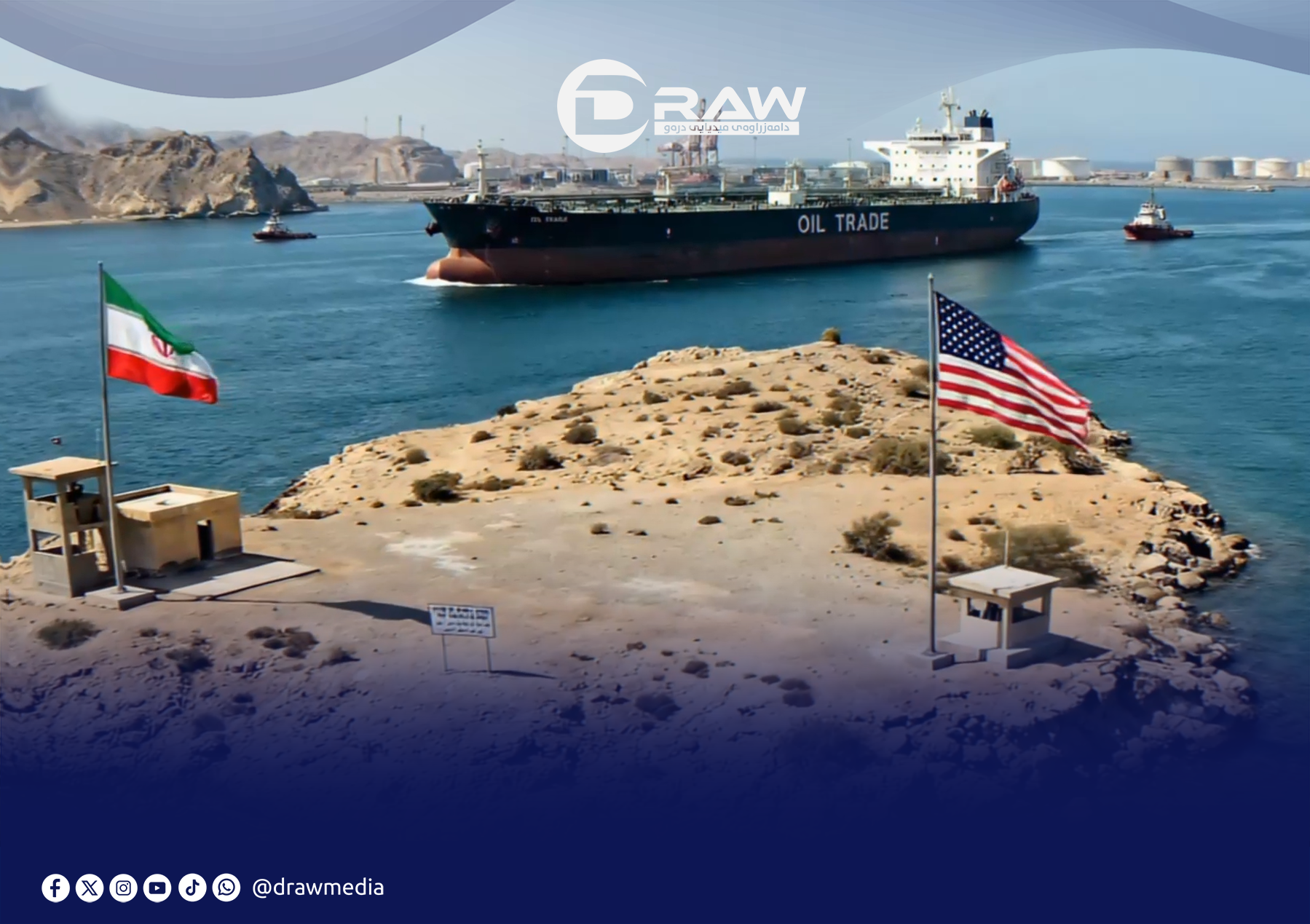
Geographically, the Strait of Hormuz differs from most other maritime routes, as for many countries in the region, there is no practical alternative. It connects the Persian Gulf to the Gulf of Oman and the Arabian Sea. Its length is about 167 kilometers, and its width ranges between 40 and 54 kilometers. Its depth varies from 60 to 100 meters. However, the narrowest navigational passage—through which global trade flows—is less than 10 kilometers wide. For this reason, a traffic separation system is used: 3 km for incoming ships, 3 km for outgoing ships, and 3 km in between as a neutral buffer zone.
Within this narrow corridor lie several islands that function like “observation towers,” including Qeshm Island, Hormuz Island, and the islands of Greater Tunb, Lesser Tunb, and Abu Musa—collectively known as the “Triangle of Fire.” These islands sit directly along shipping lanes, meaning whichever side controls them can effectively monitor vessel movement.
The Strait of Hormuz is considered the “main artery” of the global economy, as approximately 21% of the world’s petroleum liquids consumption and about a quarter of global seaborne oil trade pass through it. It also controls the transit of one-fifth (20%) of the world’s liquefied natural gas (LNG) trade. Around 93% of the oil passing through the strait comes from countries such as Saudi Arabia, Iraq, the UAE, Iran, Kuwait, and Qatar.
In 2025, an average of nearly 21 million barrels of crude oil per day, along with more than 11 billion cubic feet of natural gas, passed through the strait. Specifically:
100% of Qatar’s oil and gas exports pass through Hormuz
95% of Kuwait’s oil
85% of Iraq’s oil
65% of the UAE’s oil
45% of Saudi Arabia’s oil
A country like Iraq, which exports about 3.5 million barrels per day—85% of which passes through Hormuz—would lose nearly $300 million per day if the strait were closed. In just one month of conflict, this would amount to approximately $9 billion in losses. Other Gulf countries would face even greater losses.
Closing the strait would have devastating effects on Asian markets, as 84% of oil and 83% of gas passing through it goes to Asia. Major countries such as China, India, Japan, and South Korea alone account for 69% of total oil flows through the strait. The United States, by contrast, is least affected, importing only about half a million barrels per day from this route.
Oil transported via Hormuz is distributed approximately as follows:
38% to China
15% to India
12% to South Korea
4% to Europe
3% to the United States
19% to other countries
Beyond its impact on global energy markets, the closure of the strait would severely affect Asia and Europe. The Strait of Hormuz is not merely a waterway—it is the key to global energy stability and pricing. Any temporary disruption leads to rapid price increases and industrial slowdowns in Asia.
When Hormuz is closed, it’s not just fuel prices that rise. Asian factories—which consume 75% of Hormuz النفط—face higher electricity costs. This drives up prices of electronics, mobile phones, and automobiles worldwide. In agriculture, fertilizer production—which depends on natural gas—is disrupted. Qatar’s gas export interruptions would lead to higher global food prices.
Today, the Strait of Hormuz has become the focal point of tension and conflict between the United States and Iran, under the watchful eyes of global powers. Ultimately, it may determine not only the course of the conflict, but also the outcome of negotiations.