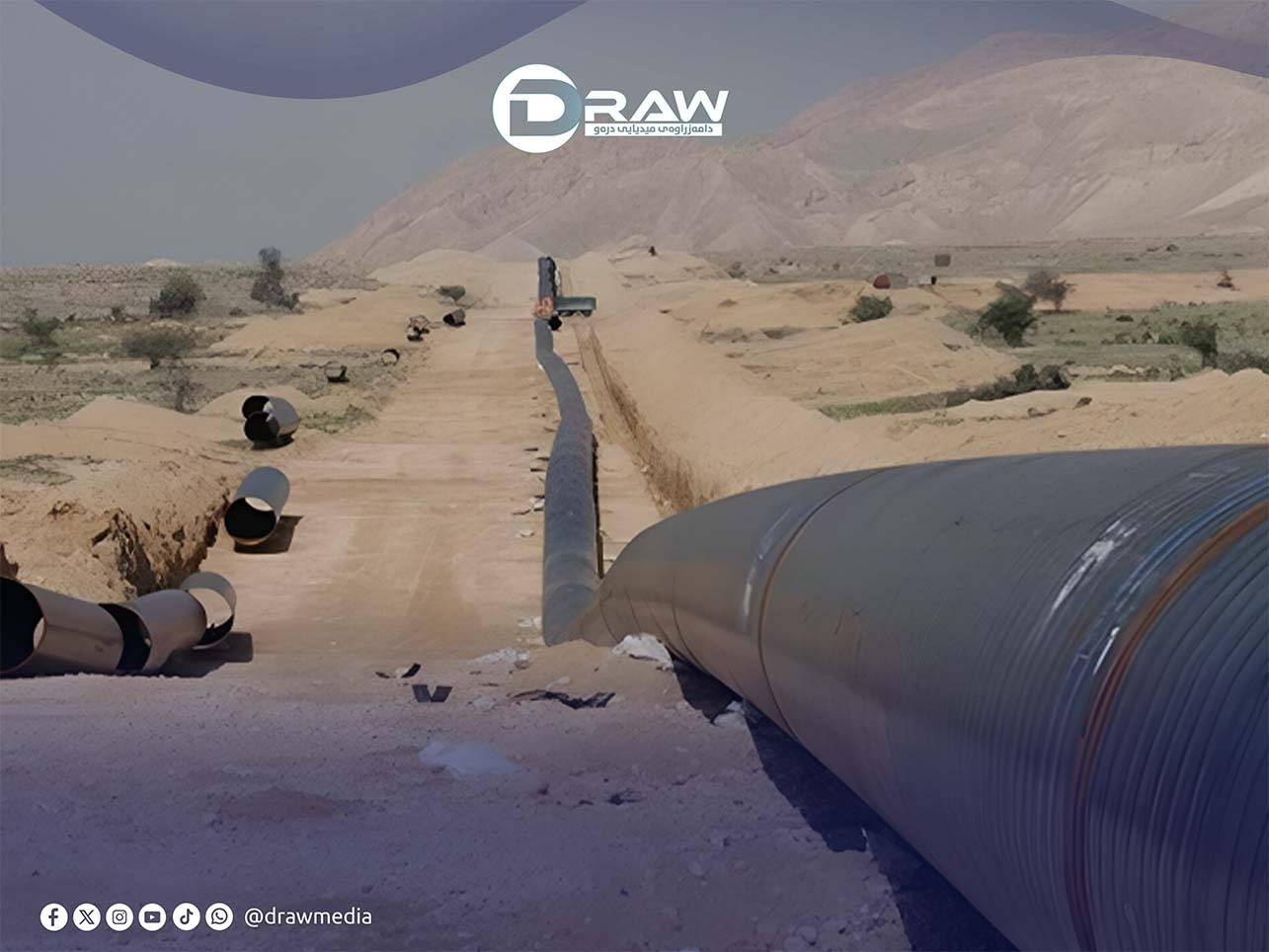
The Iraqi Ministry of Oil said it is working on establishing a new pipeline to Baniyas, Syria, while also planning to boost exports through Ceyhan, Turkey, to approximately 650,000 barrels per day.
Bassem Mohammed Khudair, Deputy Minister of Oil, told Iraqi media that there are two pipelines: the first is located within the Kurdistan Region, built in 2014, with a capacity of 900,000 barrels per day. The second is the main pipeline from Kirkuk to Fishkhabur, under the ministry’s control, with a base capacity of about 1.5 million barrels per day.
He added that the main pipeline had previously been damaged and has not yet reached its full export capacity. It is currently undergoing rehabilitation and testing.
He explained that one pumping station has been restored, bringing initial capacity to around 350,000 barrels per day. Work is ongoing with engineering companies on a second station, which could raise capacity to about 500,000 barrels per day.
The Deputy Minister noted that around 250,000 barrels per day can currently be exported from Kirkuk fields through this pipeline, but not more, due to increased domestic refining capacity in northern refineries, which now exceeds 500,000 barrels per day. About 380,000 barrels per day produced in Kirkuk are used domestically after refining, while roughly 250,000 barrels per day can be pumped to Ceyhan after processing.
He also stated that there is coordination with the Kurdistan Region regarding increasing production capacity in fields located there. However, these contracts are not under the ministry’s control, as they are agreements between the Kurdistan Region and foreign companies. Before the current conflict, available export capacity from the region was about 200,000 barrels per day, along with 50,000 barrels per day for domestic use.
Regarding increasing exports to Ceyhan, he said the goal is 400,000 barrels per day from the Kurdistan Region, combined with 250,000 barrels per day from North Oil Company, reaching a total of about 650,000 barrels per day. This depends on increasing production capacity in the region’s oil fields.
On the Kirkuk–Baniyas pipeline, he noted it is currently out of service. Studies are underway to build a new pipeline from Iraq to Baniyas. The ministry’s plan includes the Basra–Haditha pipeline, which could branch toward Jordan and Baniyas. The project is currently in the design and implementation phase and requires significant funding for construction, pumping stations, and storage facilities.
According to the official, the goal of the new strategic pipeline is to provide flexibility in supplying oil from the south to refineries in the north, and to facilitate transport in case of disruptions in the Strait of Hormuz. The pipeline will be built by an Iraqi company in the south using imported materials and international standards.
The ministry also plans to invite companies to bid for the project. Its broader strategy includes expanding southern export systems and boosting northern exports via Ceyhan and potentially Baniyas. If necessary, the Aqaba pipeline project will also continue. Additionally, transport via tankers to Turkey, Jordan, and Syria may be developed.