Turkey’s Minister of Energy, Alparslan Bayraktar, told Anadolu Agency that due to the U.S. and Israeli attacks on Iran, Turkey does not face any energy supply security issues.
Bayraktar stated that Turkey’s dependence on energy passing through the Strait of Hormuz is around 10%, which is a manageable level. He added that Turkey’s reliance on this region is at its lowest level, with Saudi Arabia and Iraq being its main suppliers. Previously, about 15% of its total energy supply came from that region.
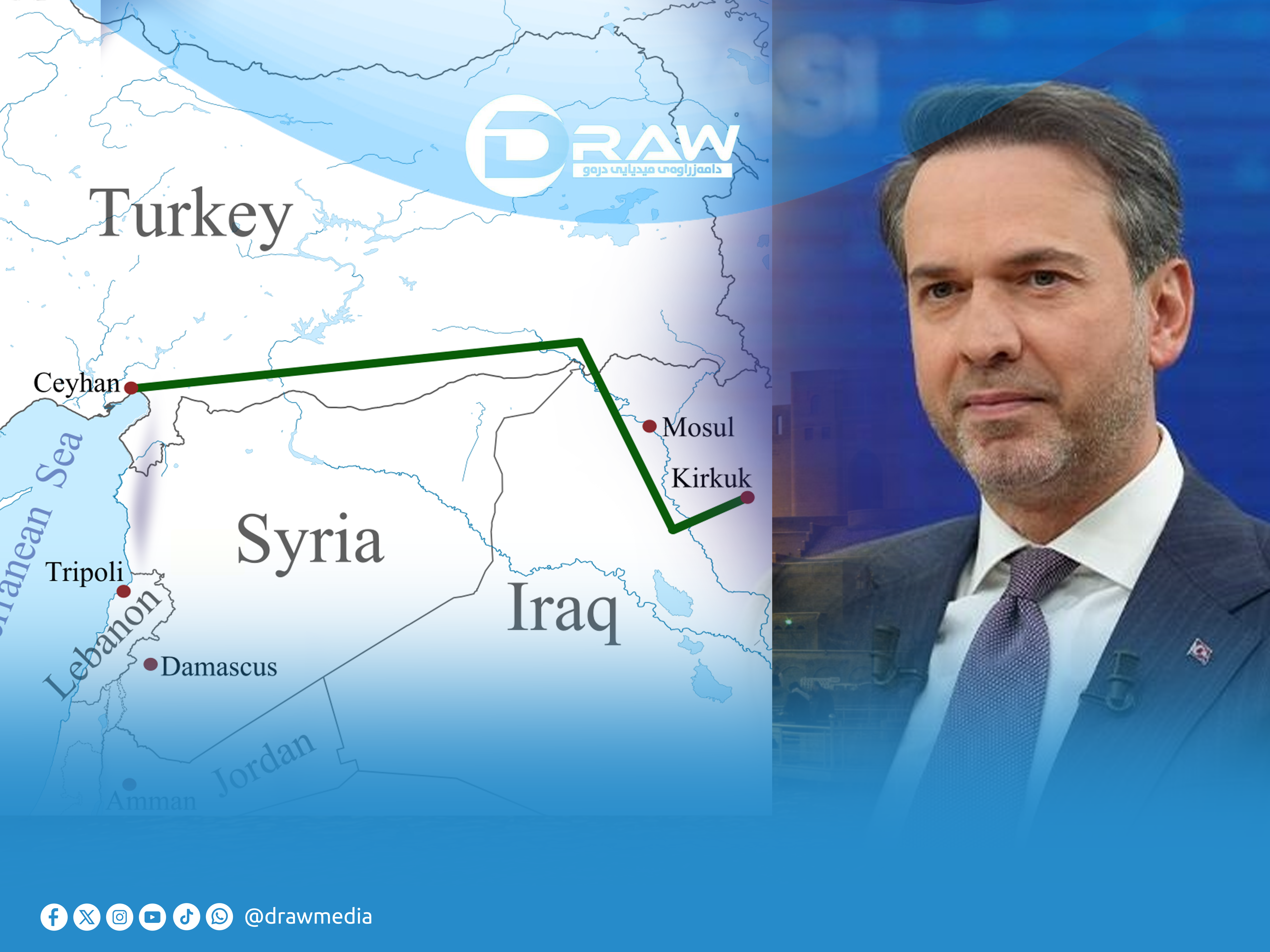
Regarding the reactivation of the Kirkuk–Ceyhan pipeline—currently under discussion by the Iraqi government—despite the Kurdistan Region agreeing to send Kirkuk’s oil through the pipeline, the Turkish minister said the pipeline has a daily capacity of 1.5 million barrels, which Turkey is capable of transporting.
He emphasized that Turkey and Iraq are brotherly nations with centuries of shared geography and should resolve their issues amicably. Turkey’s proposal includes repairing the northern section of the Iraq–Turkey pipeline, which has been damaged during conflicts such as the ISIS period and the Gulf War. Then, the pipeline would be extended from Kirkuk to Basra, reversing the oil flow direction from south to north, and exporting up to 1.5 million barrels per day through a new route.
He added: “For years, we have suggested extending this pipeline to enable the transport of 1.5 million barrels daily. This would benefit Iraq, global oil markets, and Turkey. Unfortunately, our proposals have not yet been acted upon, but perhaps this crisis will encourage all parties to reassess and implement these projects.”
In addition to extending the pipeline to Basra, Turkey also aims to transport Syrian oil through the same pipeline if it becomes operational again. Bayraktar noted that Syria is gradually returning to normal, and while such discussions were not possible a year or two ago, connecting Syrian oil fields to the Kirkuk–Ceyhan pipeline is now a project under consideration and has been discussed with Syrian counterparts. Therefore, Syrian oil could potentially be exported to global markets via this pipeline.