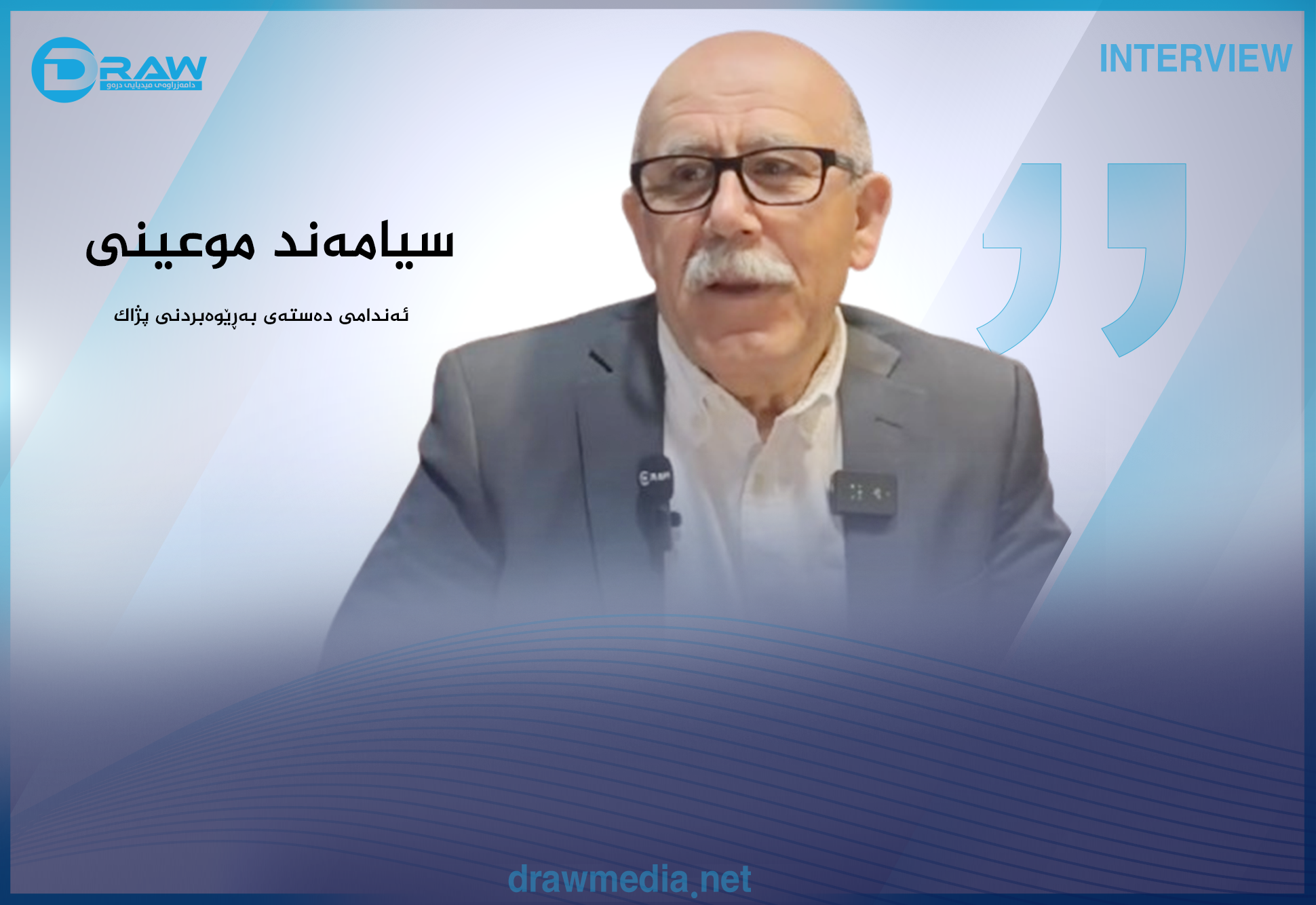
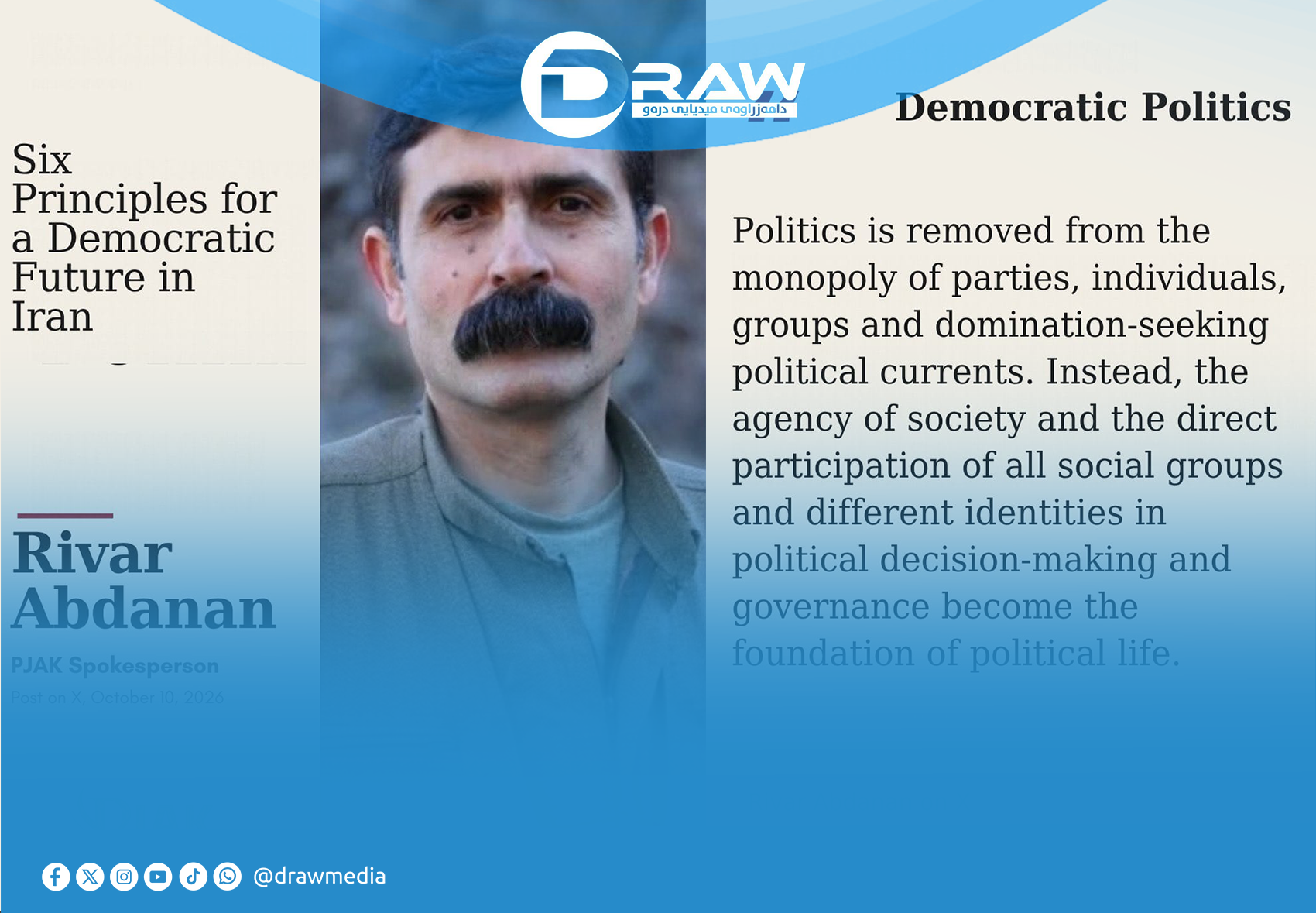
As Iran faces mounting political, economic, and ideological challenges, debates over the country's future and the prospects for political change have intensified. In an interview with Draw Media, Siamand Moeini, a member of the Leadership Council of PJAK, discusses the deepening crisis of the Islamic Republic, the role of Kurds in shaping a future political order, and the importance of decentralization in Iran.
Moeini argues that the current Iranian system has lost much of its legitimacy and that any future political arrangement must recognize the rights of the country's diverse peoples. He emphasizes the need for Kurdish unity, rejects dependence on foreign powers, and calls for East Kurdistan to become a model of democratic self-administration within a confederal framework that could inspire other regions of Iran.
Draw : How do you assess the current situation in Iran?
Siamand Moeini: Iran is facing a deep political, ideological, and economic crisis. The government is in conflict with many of the country’s peoples, struggles with severe economic problems, and faces tensions with neighboring states as well as with the international community, including the United States and Israel. Most importantly, it no longer enjoys broad public support, and many people have taken a position against the regime.
Draw : How do you view the roots of the current crisis?
Moeini: The states established after Sykes-Picot and the Treaty of Lausanne were products of colonial policies that sought to impose centralized nation-state structures on highly diverse societies. The Middle East has historically been home to multiple peoples living together for thousands of years. The attempt to force uniformity through centralized rule led to resistance movements, and the Kurdish struggle has remained one of the most persistent examples.
Draw : Can the Iranian system survive through compromise with the international community?
Moeini: Even if Iran reaches agreements with global powers or makes concessions, that does not guarantee the survival of the current system. The crisis is internal as much as external. The regime has lost much of its legitimacy, and its future depends largely on developments within Iranian society itself.
Draw : What could happen if the current regime falls?
Moeini: The key question is what kind of political system will replace it. The peoples of Iran—including Kurds, Baluch, Arabs, and Azeris—are increasingly seeking decentralized governance. Any future political order must involve all of these groups and recognize their rights.
Draw : How do you evaluate the Kurdish position regarding recent regional conflicts?
Moeini: It was the correct decision for East Kurdistan to remain outside the conflict. Without clear international guarantees, it would be dangerous for Kurds to become involved in a war whose outcome and objectives remain uncertain. Our people should not become instruments of outside powers pursuing their own strategic interests.
Draw : What opportunities exist for the Kurdish movement today?
Moeini: Kurdish political demands have already been presented to the international community. East Kurdistan is connected to all parts of Kurdistan, but the current moment places special attention on developments inside Iran. This is an opportunity that should be used wisely and strategically.
Draw : Is there coordination among Kurdish political parties in East Kurdistan?
Moeini: Yes, there is coordination among the six major Kurdish political parties. However, planning for a post-regime Iran is not enough. Kurdish forces should also contribute to a broader vision for all of Iran. Kurds possess significant political, organizational, and social capacities that can play an important role in democratic change.
Draw : What practical steps would strengthen Kurdish influence?
Moeini: National unity is essential. Kurdish parties could establish a joint diplomatic center representing East Kurdistan as a whole rather than acting separately. Such an institution could engage with the international community and advance Kurdish interests more effectively.
Draw : What is PJAK’s relationship with international powers?
Moeini: PJAK has not received weapons or military assistance from the United States, Israel, European countries, or any foreign government. Our strength comes from our people. Without popular support, no movement can sustain itself.
Draw : How do you see Iran’s future?
Moeini: The Islamic Republic still retains some support, but it has lost much of the ideological legitimacy it once enjoyed. Among Kurds, Baluch, Arabs, Azeris, and many others, confidence in the system has declined significantly. The question is no longer whether change will come, but what will replace the current order.
Draw : What is your vision for East Kurdistan?
Moeini: Our responsibility is to make East Kurdistan a model for democratic self-administration within a confederal framework. Many other communities in Iran are attracted to this idea because they want to live with dignity, security, and freedom in their own regions. Building a common democratic discourse among the peoples of Iran will be essential to preventing future conflicts and creating a stable future.